The Psychological Trap Hidden in Every Store: How Fitting Rooms Were Designed to Make You Buy
The Room That Changed How America Shops
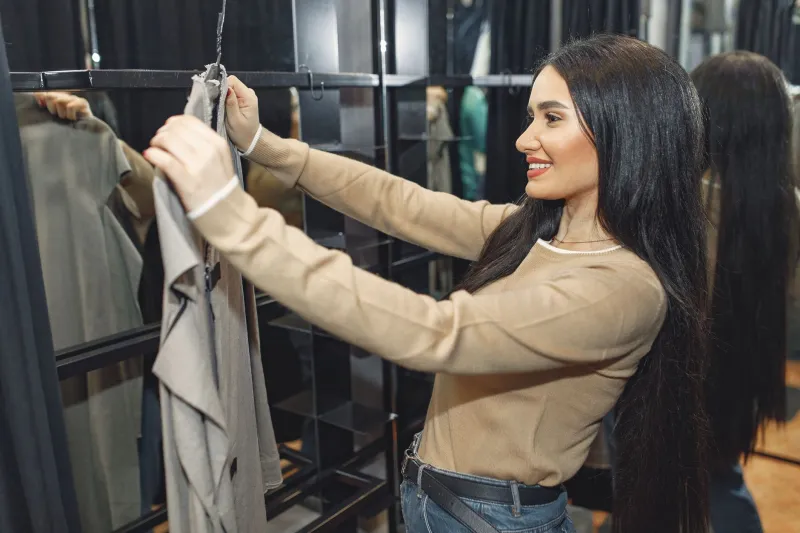
Step into any clothing store today, and you'll find them: small, private spaces lined with mirrors where you can try on potential purchases. Fitting rooms seem so natural, so obviously customer-friendly, that it's hard to imagine shopping without them.
But fitting rooms weren't invented to help customers. They were created as sophisticated psychological weapons designed to increase sales by exploiting fundamental quirks of human behavior. The story of their origin reveals how a simple retail innovation became one of the most effective sales tools ever devised.
When Shopping Meant Guessing
Before the 1870s, trying on clothes before buying them was virtually unheard of in American retail. Clothing stores operated more like warehouses — customers would examine merchandise from a distance, maybe touch fabrics, but rarely put anything on their bodies.
This wasn't just tradition; it was practical necessity. Most clothing was still custom-made, so trying on ready-made garments seemed pointless. Stores were also concerned about hygiene and theft. Letting customers handle merchandise extensively was seen as risky and unnecessary.
Shopping was largely a visual experience based on trust and guesswork. Customers relied on storekeepers' expertise and their own ability to estimate fit and quality from across a counter.
The Merchant Who Discovered Touch
Everything changed when John Wanamaker, a Philadelphia retailer, noticed something curious about customer behavior in his department store. He observed that customers who physically handled merchandise were significantly more likely to purchase it than those who only looked.
 Photo: John Wanamaker, via wimg.rule34.xxx
Wanamaker began experimenting with ways to get products into customers' hands. For clothing, this meant allowing — and eventually encouraging — customers to try items on. But he quickly realized that customers needed privacy to do this comfortably.
In 1876, Wanamaker's store introduced America's first dedicated fitting rooms: small, curtained spaces where customers could try on garments without embarrassment. The results were immediate and dramatic.
The Psychology of Physical Possession
What Wanamaker had stumbled upon was a fundamental principle of human psychology that wouldn't be formally studied until decades later. When people physically possess an object — even temporarily — they begin to feel ownership of it. Psychologists now call this the "endowment effect."
Trying on clothes triggers this psychological response powerfully. The moment a garment touches your skin, your brain starts treating it as "yours." Taking it off begins to feel like a loss rather than simply not making a purchase.
Wanamaker didn't understand the science, but he understood the results. Customers who used fitting rooms bought more items, bought more expensive items, and returned fewer purchases. The rooms weren't just convenient — they were profit machines.
The Mirror Revelation
The early fitting rooms were simple affairs — just curtained spaces with hooks for hanging clothes. But retailers quickly discovered that adding mirrors multiplied the psychological effect.
Mirrors served multiple purposes beyond the obvious one of letting customers see how clothes looked. They created a sense of private ownership over the space, making customers feel more comfortable spending time considering purchases. They also encouraged customers to imagine themselves wearing the clothes in their regular lives.
Most importantly, mirrors made the trying-on process more social, even when customers were alone. Seeing yourself in new clothes creates a kind of dialogue with your reflection, and that internal conversation almost always favors purchasing.
The Spread of a Secret Weapon
Once Wanamaker proved that fitting rooms increased sales, the concept spread rapidly through American retail. By the 1890s, most clothing stores in major cities had added fitting rooms, often as elaborate spaces designed to make customers feel pampered and special.
Department stores began competing on the luxury of their fitting rooms, adding comfortable seating, flattering lighting, and attendants to help with difficult garments. The rooms became selling environments in themselves, designed to put customers in a buying mood.
But retailers were careful not to advertise the psychological manipulation behind fitting rooms. They marketed them as customer conveniences, evidence of their commitment to service and satisfaction.
The Science Behind the Manipulation
Modern retail psychology has revealed just how sophisticated the fitting room concept really was. The rooms exploit multiple cognitive biases simultaneously:
Loss Aversion: Once you've worn something, not buying it feels like losing it.
Commitment Consistency: The act of trying something on creates a small commitment to the idea of owning it.
Social Proof: Seeing yourself dressed in the store's clothing makes you imagine others seeing you the same way.
Anchoring: The physical experience of wearing expensive clothes makes their price seem more reasonable.
The Evolution of Persuasion
As fitting rooms became standard, retailers began refining their psychological impact. They discovered that larger fitting rooms encouraged customers to bring in more items. Flattering lighting made everything look better. Comfortable seating encouraged longer consideration periods.
Some stores began providing multiple mirrors at different angles, creating a more immersive experience. Others added specialized lighting that mimicked natural daylight, helping customers imagine wearing the clothes outside the store.
The goal was always the same: maximize the psychological commitment customers felt to potential purchases.
The Digital Age Adaptation
Online shopping initially seemed to threaten the fitting room model, but retailers have adapted the psychological principles to digital spaces. Virtual fitting rooms use augmented reality to create the illusion of trying on clothes.
Some online retailers have introduced "try before you buy" programs that ship clothes to customers' homes, essentially turning living rooms into fitting rooms. The psychology remains the same: getting merchandise onto customers' bodies increases sales.
Even return policies have been adapted to exploit fitting room psychology. "Free returns" encourage customers to order multiple sizes or styles, knowing that the act of trying them on will likely result in keeping at least some items.
The Unconscious Transaction
What makes fitting rooms so effective is that customers rarely recognize the manipulation. The experience feels helpful and customer-focused, which makes people more receptive to the psychological influence.
Most shoppers believe they're making rational decisions based on fit and appearance, not realizing that the simple act of putting on clothes has already biased them toward purchasing. The fitting room creates an illusion of careful consideration while actually short-circuiting logical decision-making.
The Retail Theater
Modern fitting rooms are carefully designed theater sets, with every element chosen to encourage purchasing. The lighting is typically warmer than the main store, creating a more intimate atmosphere. The mirrors are positioned to show customers from their most flattering angles.
Even the size and shape of fitting rooms are calculated. They're large enough to feel comfortable but small enough to create a sense of private ownership. The curtains or doors provide just enough privacy to make customers feel they're in a special, exclusive space.
The Enduring Power of Touch
Despite all the technological advances in retail, the basic principle behind fitting rooms remains as powerful as ever. Physical interaction with merchandise creates emotional attachment that no amount of visual marketing can match.
This is why luxury retailers still invest heavily in elaborate fitting room experiences, and why even discount stores provide basic changing facilities. The psychology of temporary ownership is too valuable to abandon.
The Hidden Cost of Convenience
Every time you step into a fitting room, you're entering a space specifically designed to influence your purchasing decisions. What feels like a helpful customer service is actually a sophisticated psychological environment calibrated to separate you from your money.
The fitting room represents one of retail's most successful innovations — not because it made shopping more convenient, but because it made shoppers more susceptible to buying. It's a testament to how effective simple psychological manipulation can be when customers don't realize it's happening.
The next time you're trying on clothes, remember: that mirror isn't just showing you how you look. It's showing you how retailers learned to make you buy.