How a Hotel Manager's Budget Cut Accidentally Dressed Corporate America
How a Hotel Manager's Budget Cut Accidentally Dressed Corporate America
Somewhere in America right now, millions of people are getting dressed for work in a version of the same outfit: a blazer or sport coat worn over a collared shirt, without a tie, with trousers that are neither jeans nor a formal suit. They call it business casual. They wear it without thinking much about it. It feels like it has always existed.
It hasn't. And the story of where it actually came from involves no fashion designers, no cultural visionaries, and no deliberate act of style. It involves a hotel manager who needed to save money on staff uniforms.
The Problem With Livery
To understand what happened, you need a quick picture of how American luxury hotels operated in the early 20th century. The great hotels of the Gilded Age and the decades that followed — the Waldorf, the Palmer House, the Copley Plaza — were built on a specific performance of grandeur. Every detail of the guest experience was calibrated to communicate wealth and status, and nowhere was this more visible than in the uniforms worn by staff.
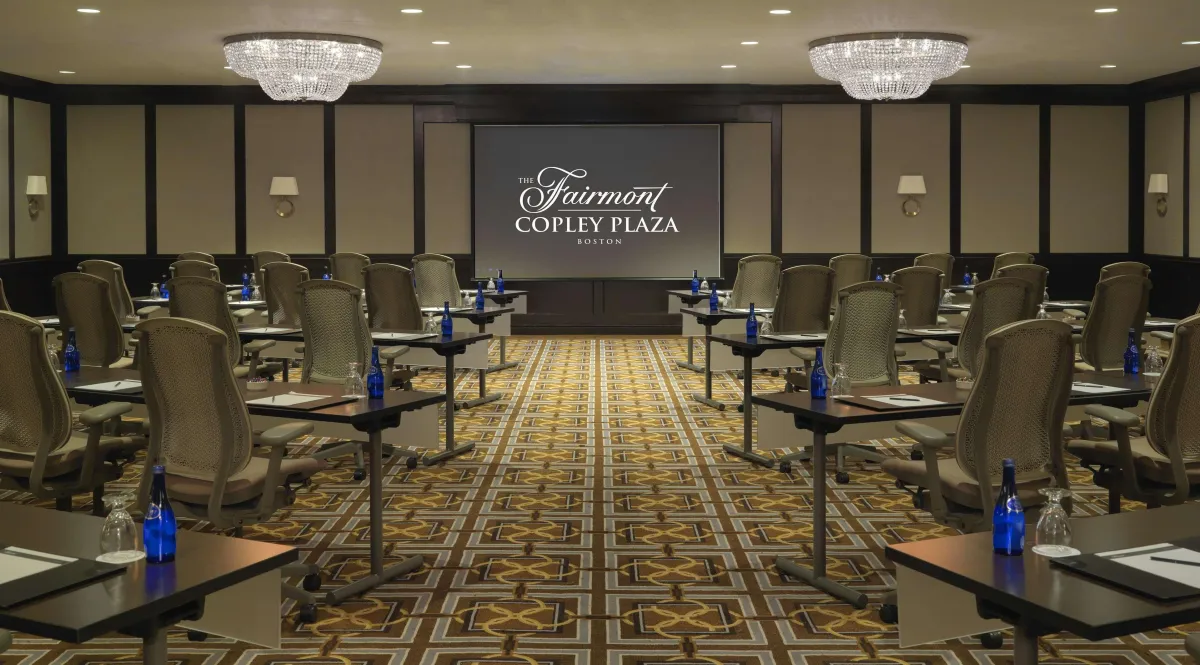 Photo: Copley Plaza, via fairmontcopleyplaza.hotelboston.info
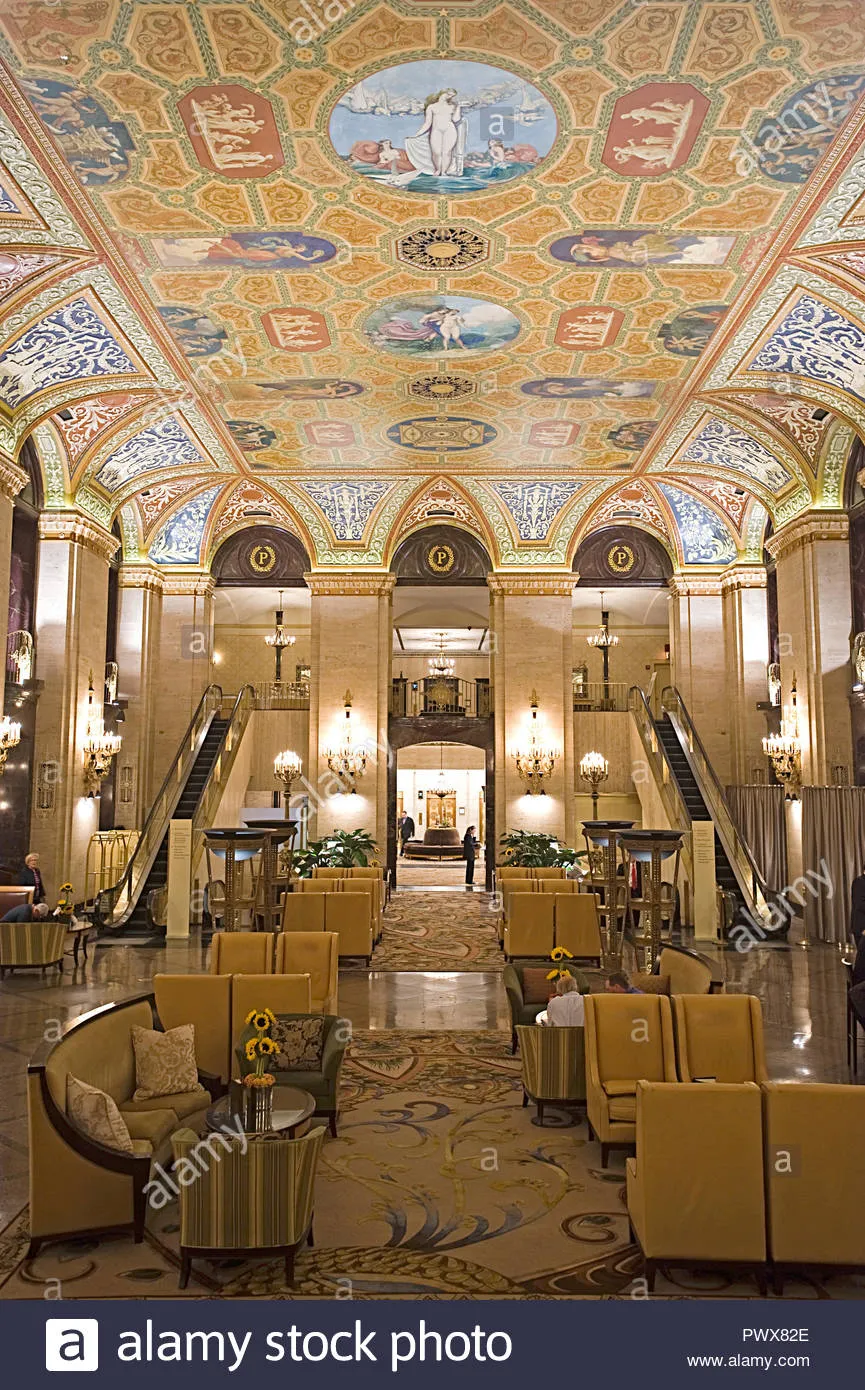 Photo: Palmer House, via c8.alamy.com
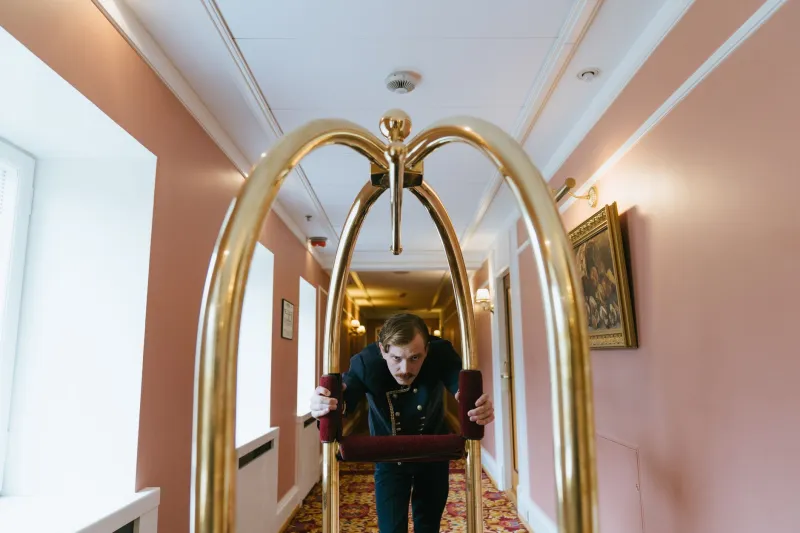
Full livery — the elaborate, quasi-military dress uniforms worn by doormen, bellhops, and floor attendants — was expensive to produce, difficult to maintain, and required regular replacement. A single livery uniform could cost a significant sum. Multiply that across a full staff, factor in the tailoring, the gold braid, the brass buttons, the upkeep, and hotel management was looking at a substantial line item just to keep their employees looking appropriately theatrical.
By the 1910s and 1920s, as operating costs rose and the labor market shifted, some hotel managers began looking for ways to reduce that expense without visibly degrading the guest experience.
The Blazer Solution
The answer, at several major hotels, was the blazer. A well-cut single-breasted jacket in a solid dark color — navy became the standard — with simple metal buttons and a clean lapel. It was far cheaper to produce than full livery. It was easier to maintain. It could be standardized across staff sizes without the elaborate custom tailoring that livery required. And it looked, to a certain kind of eye, genuinely smart.
The blazer wasn't invented by these hotels — it had existed in British nautical and sporting contexts since at least the mid-19th century, most famously associated with rowing clubs and cricket teams. But American hotels gave it a new context: the blazer as professional uniform, worn in a setting of luxury and leisure by people whose job was to make wealthy guests feel comfortable.
And here is where the accident happened.
When the Guests Wanted the Staff's Jacket
The wealthy guests staying at these hotels noticed the staff's jackets. This is perhaps not surprising in retrospect — the blazer is a genuinely attractive garment, and seeing it worn consistently in a context of upscale service gave it an association with a certain kind of relaxed, confident elegance. But the guests didn't know they were admiring a cost-cutting measure. They thought they were admiring a look.
Some of them began requesting similar jackets from their own tailors for informal occasions — weekend gatherings, country club lunches, social events that were too relaxed for a full suit but too important for truly casual dress. The blazer filled a gap in the wardrobe that the guests hadn't previously known was there.
From there, the diffusion followed a fairly predictable path. Country clubs adopted the blazer as standard attire. Prep schools incorporated it into their dress codes. The Ivy League universities — whose students were largely drawn from the same social class that stayed at grand hotels and belonged to country clubs — made it a campus staple. Brooks Brothers, always alert to what its core customer was already wearing, began producing blazers as a central product.
By the mid-20th century, the navy blazer was firmly established as the uniform of a certain kind of American male respectability — not formal enough to be stuffy, not casual enough to be dismissed.
The Long March Into the Office
The final stage of the blazer's journey — from leisure wear to workplace standard — happened gradually, over several decades, driven by forces that had nothing to do with hotels or country clubs.
The postwar American economy created a massive expansion of white-collar work. Millions of men who might previously have worked in environments with no dress expectations at all were now sitting in offices, attending meetings, representing companies. The full suit — the standard of pre-war professional dress — was expensive, uncomfortable, and increasingly at odds with the more democratic, less hierarchical spirit that postwar American culture was at least nominally promoting.
The blazer offered a middle path. It communicated seriousness without the rigid formality of a matched suit. It allowed for individual expression through the shirt and trousers worn beneath it. It was versatile enough to move from the office to a dinner to a weekend afternoon without requiring a full change of clothes. And crucially, it already carried decades of association with the right kind of American respectability.
Corporate America didn't adopt the blazer as a deliberate policy decision. It absorbed it the same way it absorbs most cultural shifts — gradually, then suddenly, with nobody quite able to point to the moment it became standard.
The Irony at the Center of the Story
The modern business casual dress code is now so universal that it has spawned its own anxieties, its own subcultures, its own endless debates about what exactly qualifies. Tech companies have pushed it further toward pure casual. Law firms have held the line closer to formal. Somewhere in between, most of corporate America dresses in a daily negotiation with a code that nobody officially wrote.
That code traces its DNA, in a direct and slightly absurd line, to a hotel manager who looked at his uniform budget and decided that blazers were cheaper than livery.
The guests who copied his staff's jackets thought they were borrowing from sophisticated leisure culture. They were actually borrowing from an accountant's spreadsheet. And the offices full of people in blazers today are, without knowing it, wearing the distant echo of a cost-cutting decision made in a hotel back office sometime around 1920.
Fashion has always had stranger origins than it admits. This one might be the strangest of all.