The Paint Shop Disaster That Became America's Favorite Color
The Mess That Made History
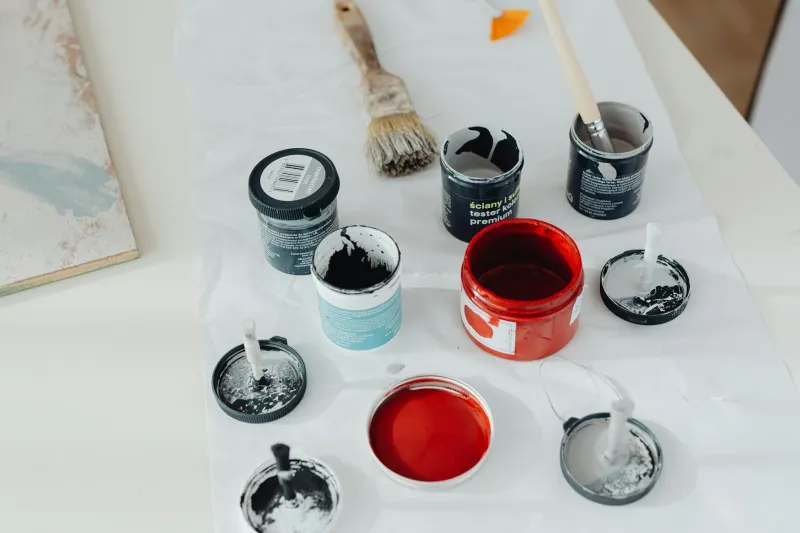
Sometime in the mid-1850s, a house painter named Marcus Thompson was having the worst day of his career. Working in his cramped Philadelphia workshop, Thompson had been experimenting with a new batch of titanium-based pigments imported from Europe. The stuff was expensive, revolutionary, and promising to create whites brighter than anything American painters had ever seen.
 Photo: Marcus Thompson, via i0.wp.com
Then he knocked over the entire mixture.
The thick, brilliant paint splattered across his work pants, creating streaks of white so vivid they seemed to glow. Thompson's first instinct was to curse his clumsiness. His second was to stare at those pants and realize he'd accidentally created something extraordinary.
From Workshop Floor to American Icon
What Thompson had stumbled upon was a titanium dioxide formula that produced a white unlike any color Americans had ever experienced. Previous whites were chalky, gray-tinged, or yellowed quickly. This new white was pure, brilliant, and stable. It didn't fade. It didn't crack. It practically announced itself.
Word of Thompson's "accident white" spread through Philadelphia's painting community like wildfire. Within months, every wealthy homeowner in the city was demanding this new paint for their trim, their shutters, their garden fences. The color was so striking that it made everything else look dingy by comparison.
But Thompson's spilled paint was about to become something much bigger than a local trend. It was about to become the official color of American dreams.
The Color of Aspiration
As America entered the Industrial Age, this brilliant white became the visual shorthand for everything the growing nation wanted to represent: cleanliness, prosperity, and moral purity. White picket fences sprouted across suburban neighborhoods like flowers after rain. White wedding dresses, once reserved for royalty, became every American bride's expectation. Even the nation's most important house got a fresh coat of Thompson's formula.
The psychology was simple but powerful. In a rapidly industrializing country where cities were becoming grimy and chaotic, white represented escape. It suggested a clean slate, a fresh start, the possibility of something better. Americans weren't just painting their houses white—they were painting their aspirations.
The Science Behind the Symbol
What made Thompson's accidental formula so revolutionary wasn't just its appearance—it was its chemistry. The titanium dioxide particles were perfectly sized to scatter light in a way that created maximum brightness and opacity. Unlike lead-based whites that poisoned families or lime-based paints that cracked and yellowed, this white stayed white.
The paint industry quickly reverse-engineered Thompson's accident, but the cultural impact was already unstoppable. White had become America's signature color, and there was no going back.
Building an Empire in White
By the 1920s, white had become so embedded in American culture that entire industries depended on it. White kitchens signaled modern hygiene. White cars suggested luxury and sophistication. White teeth became a national obsession. The color that started as a workshop mishap had become a multi-billion-dollar cultural force.
Advertisers understood the power of Thompson's accident better than anyone. White washing machines promised cleaner lives. White refrigerators offered fresher food. White houses represented the American Dream made manifest. The spilled paint had become the visual language of progress itself.
The Dark Side of Bright White
But America's obsession with white carried complicated undertones. The same color that represented purity and aspiration also became a tool of exclusion. White neighborhoods, white schools, white churches—the color that promised inclusion often delivered the opposite.
Even today, real estate agents know that white paint can add thousands to a home's value, not because of any practical benefit, but because of the cultural weight that one painter's accident accumulated over 170 years.
The Accident That Won't Fade
Marcus Thompson probably never imagined that his clumsiness would reshape American visual culture. His spilled paint became the color of wedding cakes and graduation caps, of hospital walls and corporate logos, of every suburban dream house from sea to shining sea.
Today, Americans spend billions annually on white paint, white appliances, and white everything else, all because one Philadelphia painter had a very bad day that turned out to be very good for America. Sometimes the most powerful cultural forces start with the simplest accidents—and the most enduring symbols begin with the biggest messes.