The Hygiene-Obsessed General Who Put Useless Buttons on Every Man's Sleeve
The General's Gross-Out Moment
General Friedrich von Steuben had survived Valley Forge, trained the Continental Army, and helped win American independence. But in 1782, nothing disgusted him more than watching his Prussian regiment use their uniform sleeves as handkerchiefs.
 Photo: Valley Forge, via images.pexels.com
 Photo: Friedrich von Steuben, via i.pinimg.com
Von Steuben was a man obsessed with military precision and personal hygiene—unusual traits in an era when bathing was considered dangerous and most people owned one set of clothes. Watching his soldiers constantly wipe their noses, mouths, and sweat on their uniform sleeves made his skin crawl.
So he did what any control-obsessed military commander would do: he ordered his tailor to sew a row of metal buttons along the outside of every sleeve.
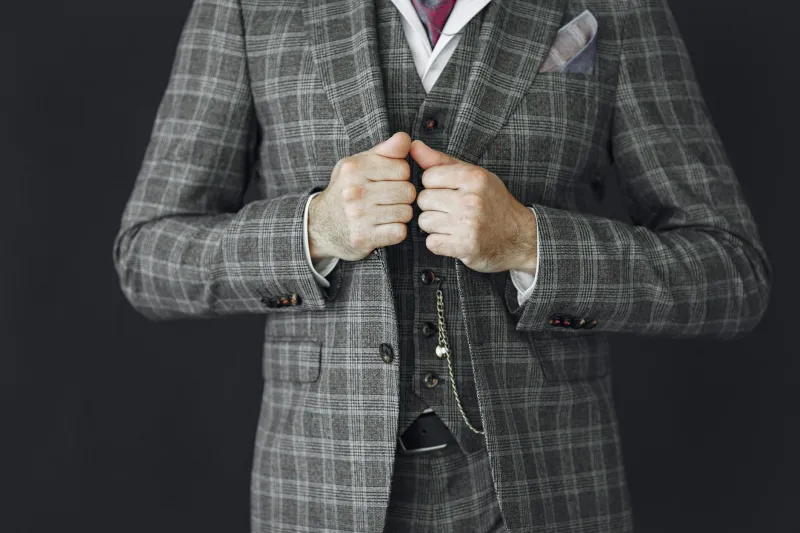
The logic was simple and slightly sadistic. Try to wipe your nose on a sleeve covered in sharp metal buttons, and you'd scrape your face raw. It was behavioral modification through fashion design, and it worked perfectly.
From Military Discipline to Fashion Statement
Von Steuben's anti-nose-wiping innovation might have stayed buried in military history, except for one problem: his officers looked incredible. The sleeve buttons added a sharp, decorative element that made their uniforms appear more elaborate and expensive than they actually were.
When these officers returned to civilian life after the war, they wanted to maintain that polished military aesthetic. Tailors across the new American republic began adding sleeve buttons to civilian coats, not because anyone needed them, but because they suggested the wearer had military bearing and attention to detail.
What started as a hygiene enforcement mechanism had accidentally become a status symbol.
The Detail That Conquered Menswear
By the 1820s, sleeve buttons had become standard on every well-made men's coat in America. Savile Row tailors in London adopted the detail, French couturiers embraced it, and eventually every serious menswear tradition included von Steuben's anti-nose-wiping innovation.
 Photo: Savile Row, via lh6.googleusercontent.com
The buttons served no functional purpose—they couldn't be unbuttoned, didn't hold anything closed, and added unnecessary cost to every garment. But they had become the visual shorthand for quality tailoring, the kind of "unnecessary" detail that separated expensive clothes from cheap ones.
The Psychology of Pointless Perfection
What made von Steuben's sleeve buttons so enduring wasn't their practicality—it was their impracticality. In a world where most clothing details served obvious functions, these buttons were purely decorative. They announced that the wearer could afford clothing with unnecessary embellishments, that he had moved beyond mere utility into the realm of style.
Psychologists call this "conspicuous consumption"—the human tendency to display wealth through obviously expensive but functionally useless details. Von Steuben had accidentally created one of menswear's most persistent examples of this phenomenon.
The American Adoption
American men embraced sleeve buttons with particular enthusiasm because they solved a uniquely American problem: how to look sophisticated without appearing aristocratic. In a democracy that rejected European nobility, sleeve buttons offered a way to signal refinement that felt earned rather than inherited.
Unlike elaborate embroidery or jeweled accessories that screamed "old money," sleeve buttons whispered "good taste." They suggested the wearer understood quality without flaunting wealth, perfect for a nation trying to define its own version of masculine elegance.
The Modern Mystery
Today, millions of American men wear suits with sleeve buttons without having any idea why they're there. Some high-end tailors still make the buttons functional, allowing the sleeve to be adjusted for length, but most are purely decorative—direct descendants of von Steuben's nose-wiping prevention system.
The detail has become so embedded in menswear tradition that removing it would feel wrong, even though no one remembers its original purpose. It's fashion's equivalent of the appendix—a vestigial feature that serves no current function but remains because evolution (or in this case, tradition) doesn't easily abandon what once worked.
The General's Lasting Victory
Friedrich von Steuben probably never imagined that his solution to a military hygiene problem would outlast the Prussian army, survive the Industrial Revolution, and become a permanent fixture of American business attire. His sleeve buttons have appeared on the jackets of presidents, CEOs, and grooms for over two centuries.
Every time a man adjusts his suit jacket or admires the craftsmanship of his sleeves, he's participating in a tradition that began with one general's disgust at poor military hygiene. It's a reminder that the smallest details in fashion often have the strangest origins, and that sometimes the most enduring innovations come from the most specific problems.
The Vanity That Became Tradition
The next time you notice those little buttons marching up a suit jacket sleeve, remember that you're looking at the fashion equivalent of a historical footnote—one man's obsession with cleanliness that accidentally became every man's symbol of sophistication.
Von Steuben's sleeve buttons prove that the line between practical solution and pointless tradition is often thinner than we think. Sometimes the most persistent elements of style are the ones that started with the most personal pet peeves. And sometimes, the best way to solve a hygiene problem is to make it hurt to ignore it.