One Salesman's Bad Morning in Boston and the Disposable Economy He Built From It
One Salesman's Bad Morning in Boston and the Disposable Economy He Built From It
It was somewhere around 1895, and King Camp Gillette was having a terrible morning.
He was a traveling salesman working for the Crown Cork and Seal Company — the kind of man who moved from city to city selling bottle caps, which meant he understood, better than most, the power of a product people had to keep buying. His boss, a man named William Painter, had invented the disposable bottle cap and offered Gillette a piece of advice that would eventually change American commerce: find something people use once and throw away.
Gillette had been carrying that idea around for years without landing on anything. Then one morning in Boston, standing at his bathroom mirror with a straight razor that had gone dull and couldn't be sharpened further, the idea arrived.
The Problem With the Straight Razor
Before Gillette, shaving was a serious business. The straight razor — a long, folding blade of hardened steel — was the standard tool, and it required real skill to use without cutting yourself. It also required regular maintenance. Men either learned to strop and hone their own blades, or they visited a barber. A good straight razor was expensive, built to last decades, and passed down through families like a piece of furniture.
This was the problem Gillette recognized that morning: the straight razor was designed to last forever. There was no repeat sale. Once a man owned one, the barber supply industry had him, but the razor manufacturer didn't.
What if, Gillette thought, you separated the handle from the blade? What if the handle was durable and cheap, and the blade was thin, stamped steel — sharp enough for a week, then disposable? You'd sell the handle once. You'd sell the blade forever.
It was so simple it sounds obvious now. In 1895, it was genuinely radical.
Six Years of Being Told It Was Impossible
Gillette spent the next several years trying to find a metallurgist who could make his idea work. The technical challenge was significant: stamping thin steel into a blade sharp enough to shave with, cheaply enough to be disposable, was not something existing manufacturing processes could easily deliver. Every expert he consulted told him it couldn't be done.
In 1901, he finally connected with an MIT-trained engineer named William Nickerson, who cracked the manufacturing problem. Together they founded the American Safety Razor Company — later renamed the Gillette Safety Razor Company — and filed for a patent in 1901, which was granted in 1904.
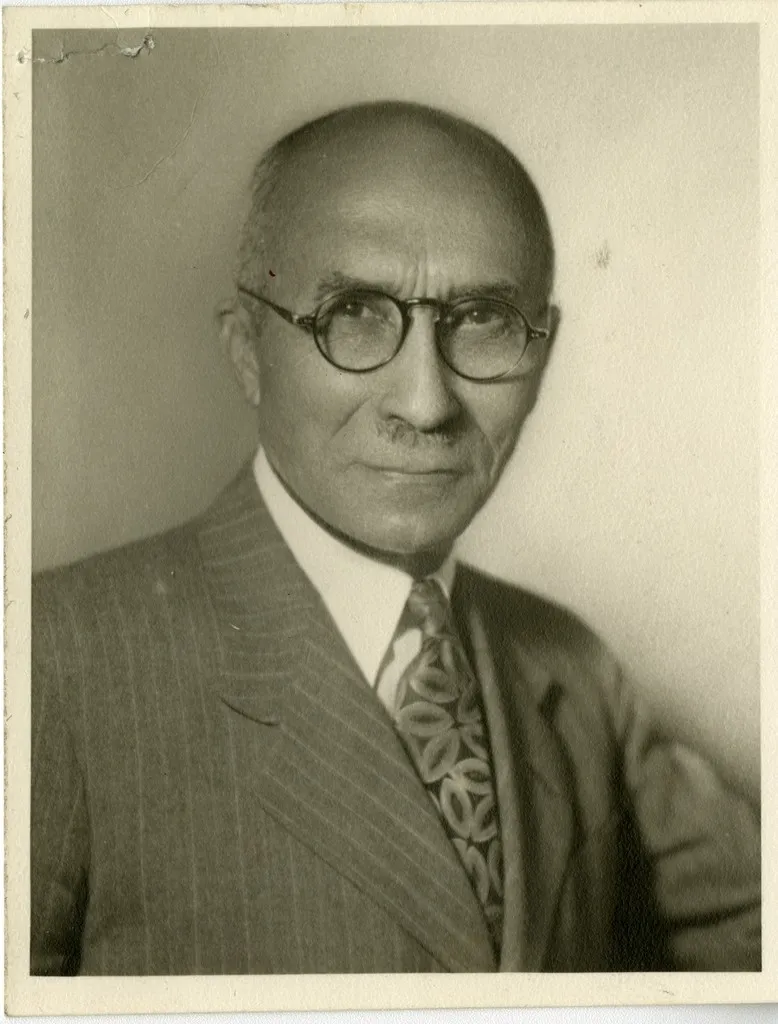 Photo: William Nickerson, via calisphere.org
First-year sales were modest. Gillette sold 51 razors and 168 blades in 1903. The following year, he sold 90,000 razors and nearly 12.5 million blades.
The concept had been proven. Now it needed a market.
The Army Contract That Made It National
The real acceleration came during World War I. The U.S. government issued Gillette safety razors to American troops as part of their standard kit — roughly 3.5 million razors and 32 million blades went to soldiers between 1917 and 1918. The military's reasoning was practical: straight razors were dangerous in the field, and clean-shaven faces made gas masks seal properly.
But the cultural consequence was enormous. An entire generation of American men came home from the war having shaved with a Gillette for two years. They were comfortable with it, loyal to it, and they knew exactly where to buy replacement blades. Gillette had, in effect, used the U.S. military as a nationwide product trial.
By the 1920s, Gillette's sales model had become a machine. The handle price dropped. Blade prices stayed steady. Men bought blades the way they bought groceries — regularly, automatically, without thinking much about it.
The Template That Outlived the Razor
What Gillette invented wasn't just a shaving product. It was a business architecture. Economists and business theorists would later call it the "razor and blades" model, or sometimes the "bait and hook" model: sell the durable platform at cost or below, and capture margin on the consumable refills.
The model spread slowly at first, then all at once.
Kodak built its business on cheap cameras and expensive film. Polaroid sold cameras and lived on film cartridges. In the 1980s and 1990s, inkjet printer manufacturers figured out that printer hardware could be sold at near cost if ink cartridges were priced at a significant premium — a margin structure that eventually made inkjet ink, ounce for ounce, more expensive than vintage champagne. Nespresso built a multi-billion dollar business on a coffee machine that required proprietary pods. Video game consoles are sold at or below manufacturing cost; the money comes from software licensing.
Every one of those business models traces a direct line back to King Gillette standing in front of a bathroom mirror in Boston with a dull blade.
The Irony at the Center of the Story
There's something worth pausing on here. Gillette was, by most accounts, a committed utopian. He wrote books imagining a cooperative future society where competition and waste were eliminated. He believed capitalism in its current form was destructive and inefficient.
And then he built one of the most influential models in the history of American consumer capitalism — one explicitly designed to create perpetual dependency, to engineer the need for repeat purchases, to ensure that no single sale was ever final.
The man who dreamed of eliminating waste invented the disposable economy.
That tension doesn't diminish what he built. If anything, it makes the story more honest. The best business ideas often come from people who are genuinely trying to solve a problem — and end up solving it in a way that creates ten new ones.
Every time you swap out a printer cartridge, reload a coffee pod, or toss a razor blade after a week, you're living inside a system that started with one salesman, one dull blade, and one very cold Boston morning.