One Forgotten Wallet and the Dinner That Rewired the American Economy

There's a particular kind of panic that sets in when the check arrives and you realize your wallet is sitting on your dresser at home. For most people, that moment ends with a sheepish call to a friend or a quick trip to an ATM. For Frank McNamara, it ended with a napkin idea that changed the way every American spends money.
 Photo: Frank McNamara, via dynamic-media-cdn.tripadvisor.com
It was 1949. McNamara was a credit executive in New York City, the kind of man who lunched at places with linen tablecloths and wine lists. On one particular evening at Major's Cabin Grill in Manhattan, he sat across from a business associate, ordered freely, and then reached for a wallet that wasn't there. The humiliation was immediate. His wife had to drive into the city to bail him out with cash.
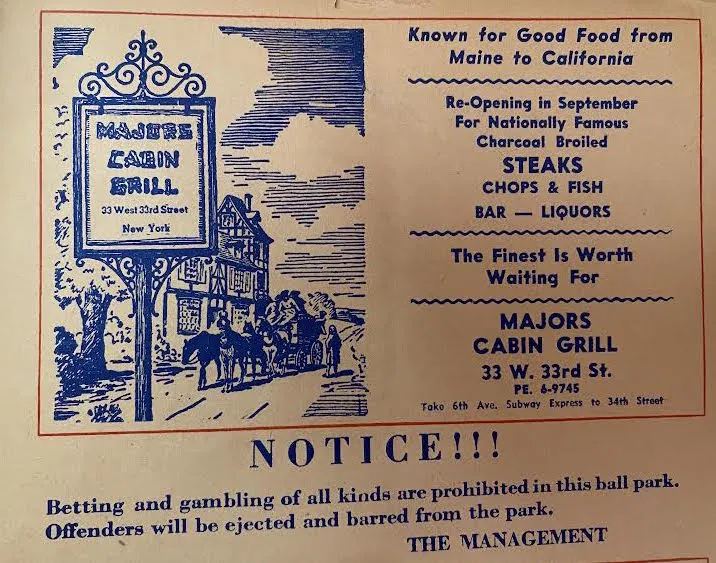 Photo: Major's Cabin Grill, via ephemeralnewyork.wordpress.com
Most men would have gone home, poured a drink, and tried to forget the whole thing. McNamara went home and started drawing.
The Napkin That Started It All
The concept McNamara sketched out was deceptively simple: what if a card — just a card — could stand in for cash at any restaurant in the city? Not a store credit account, which already existed in various forms, but a universal charge card accepted across multiple businesses. The cardholder would pay the issuing company at the end of the month. The company would pay the restaurants. Everyone would trust the card.
He pitched the idea to his lawyer, Ralph Schneider, and together they founded the Diners Club in 1950. The name was literal — it was a club for diners, people who ate out regularly and wanted to do so without carrying wads of cash. The first batch of cards went to 200 people, mostly McNamara's friends and business contacts. Twenty-seven New York restaurants agreed to accept them.
By the end of that first year, Diners Club had 20,000 cardholders and had processed over a million dollars in charges. McNamara reportedly returned to Major's Cabin Grill the following year, ordered the same meal, and paid with his card. He called it "the First Supper." The man had a flair for drama.
Why This Was Actually Radical
To understand why the Diners Club card was genuinely revolutionary, you have to remember what American commerce looked like before it. Cash was king. Store credit existed, but it was hyperlocal — a tab at your butcher, an account at your department store. There was no mechanism for a stranger to walk into a business and say "I'm good for it" in any portable, verifiable way.
McNamara's card changed the underlying logic of a transaction. It inserted a trusted third party between the buyer and the seller, vouching for the buyer's ability to pay. That triangular relationship — consumer, merchant, card company — is the same structure underpinning every Visa, Mastercard, and American Express transaction happening right now, millions of times a day.
Bank of America launched the BankAmericard in 1958, which eventually became Visa. American Express launched its own card the same year. By the 1960s, the credit card was no longer a novelty for expense-account lunches — it was becoming a fixture of everyday American spending.
 Photo: Bank of America, via www.marketbeat.com
The Slow Erosion of Cash Culture
What McNamara had actually invented wasn't just a payment method. He'd invented a new relationship between Americans and money — one where spending could be separated from the immediate, physical act of handing over currency. Economists have written entire papers about how this psychological shift altered consumer behavior. When you don't feel the cash leaving your hand, you spend differently. You spend more.
Retailers figured this out quickly. The friction of cash — counting it, handing it over, getting change — creates tiny moments of hesitation that card transactions eliminate entirely. That's not an accident. It's built into the design of the system McNamara accidentally architected from a place of embarrassment.
By the 1980s and 1990s, carrying a credit card wasn't just convenient — it was a marker of financial adulthood. The wallet itself evolved around the card, sprouting plastic sleeves and dedicated slots. Cash started shrinking toward the back.
What the Dinner Table Forgot to Tell Us
The credit card story has a darker current running beneath the convenience narrative. The same system that freed McNamara from a humiliating dinner also created the architecture for America's consumer debt crisis. Outstanding credit card debt in the United States currently sits above a trillion dollars. The frictionless spending that makes the card so appealing is the same quality that makes it dangerous for millions of households.
McNamara himself sold his stake in Diners Club just two years after founding it, reportedly for around $200,000. He died in 1957, before he could see the full scope of what he'd set in motion.
But the shape of his idea is still everywhere. Every time you tap your phone to pay for coffee, every time you click "save card" on a checkout page, every time you split a dinner bill through an app — you're living inside the system a mortified man sketched on a napkin because he forgot his wallet.
Some of the most consequential inventions in American life didn't come from laboratories. They came from moments of ordinary, human embarrassment, and the stubborn refusal to let that embarrassment be the end of the story.