The Surplus Canvas That Taught America How to Sit Outside
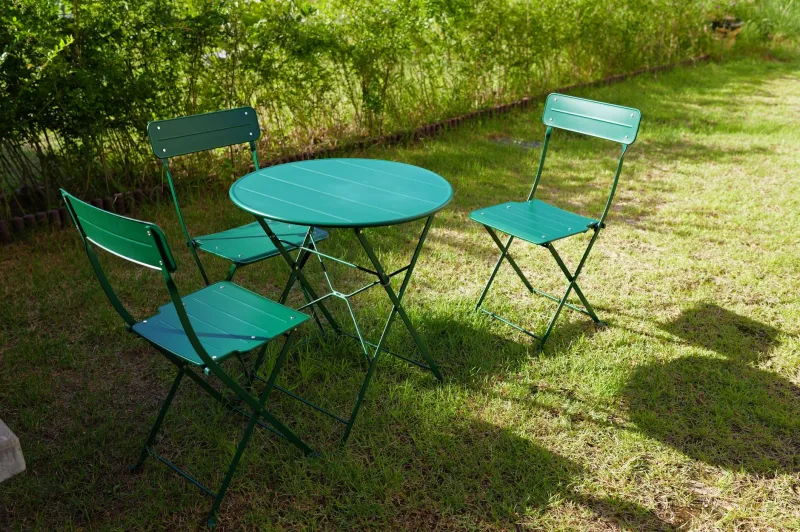
There's a folding chair in your garage, or your shed, or the back of your car. Maybe it's a classic canvas-and-wood camp chair, maybe it's a webbed aluminum number from the 1970s, maybe it's one of those padded modern versions with a cupholder and a carry bag. Whatever form it takes, it almost certainly lives a patient, folded life until someone drags it out for a ballgame or a backyard cookout.
That chair has a stranger origin story than you'd expect. It didn't begin in a furniture designer's studio or a leisure goods catalog. It began in a surplus warehouse, surrounded by canvas that nobody wanted, in the uncertain economic optimism of postwar America.
What Happens to a Wartime Economy When the War Ends
When World War II concluded in 1945, the United States military was sitting on an almost incomprehensible volume of surplus material. Tents, tarps, truck covers, webbing, rope, cots, and canvas by the acre — manufactured for a war machine that had suddenly stopped needing it. The government needed to move this material out of storage, and it did so through surplus auctions and sales that flooded the civilian market with cheap, durable goods.
 Photo: World War II, via englishpluspodcast.com
Small manufacturers, entrepreneurs, and thrifty craftspeople descended on this surplus like a gold rush. The canvas, in particular, was exceptional material — heavy, weather-resistant, tightly woven, built to survive conditions far harsher than a summer afternoon. It had been made to shelter soldiers in the field and cover military equipment through European winters. A little backyard sun wasn't going to trouble it.
Around the same time, the circus and carnival industries — which had their own surplus problems after wartime travel restrictions had curtailed touring — were offloading rejected or worn tent canvas at low prices. This material, often in stripes and bold colors, found its way into the same surplus channels.
Building Leisure Out of Leftovers
The people who first turned this surplus canvas into furniture weren't interior designers or leisure goods companies. They were practical craftspeople and small-scale manufacturers who saw cheap, durable material and asked what it could do that it hadn't done before.
The basic camp chair design — a wooden or metal frame with canvas stretched across it for the seat and back — had existed in various forms since the nineteenth century. Military field chairs, campaign furniture, and director's chairs all shared the same essential logic: a collapsible frame plus a piece of fabric equals a portable seat. What changed in the postwar years was the economics. Suddenly, the canvas was almost free, and the frames could be knocked together cheaply from aluminum or lightweight wood.
Small manufacturers started producing folding lawn chairs and camp chairs in significant quantities through the late 1940s and into the 1950s. They were sold at hardware stores, through mail-order catalogs, and at the new suburban home improvement retailers that were sprouting up alongside the postwar housing boom. They were inexpensive enough that a family could buy several without much deliberation.
The Postwar Backyard as an American Dream
The timing was not coincidental. The postwar suburban expansion created something America had never had at this scale before: millions of families with private outdoor space. The GI Bill and the construction boom sent returning veterans and their young families into newly built ranch houses and split-levels across the country, each with a patch of grass out back that needed to be furnished and used.
 Photo: GI Bill, via millennialdollar.com
The backyard became a canvas — literally and figuratively — for a new American vision of leisure. The cookout, the lawn, the garden hose, the above-ground pool, the patio: these weren't ancient traditions. They were inventions of the 1950s, assembled from the materials and the optimism of a country that had just survived something terrible and was ready to sit down and enjoy itself.
The folding canvas chair fit perfectly into this new landscape. It was cheap, it was casual, it folded flat for storage, and it could be moved anywhere — from the porch to the yard to the driveway to the campsite. It required no installation, no maintenance, no commitment. You just unfolded it and sat down.
The Aluminum Reinvention and the Long Afterlife
By the late 1950s and into the 1960s, the canvas-and-wood design began giving way to a new iteration: the aluminum folding chair with woven plastic webbing in candy-colored stripes. The canvas was expensive to produce in large volumes, and the postwar surplus was drying up. Aluminum was lightweight, rust-resistant, and cheap to manufacture at scale. Plastic webbing was even cheaper than canvas and came in cheerful colors that suited the optimistic aesthetic of mid-century America.
The webbed aluminum lawn chair became one of the best-selling furniture items in American history — ubiquitous at every backyard, every Little League game, every beach, every family reunion. It is so ordinary that most people have never thought to wonder where it came from.
The modern camp chair — the kind with a steel or aluminum tube frame, a fabric seat and back, and a carry bag — is a direct descendant of both traditions. The logic is identical to what those postwar craftspeople assembled from surplus canvas: a collapsible frame, a piece of durable fabric, a portable seat.
What the Chair Actually Carries
The folding lawn chair is, in a quiet way, one of the most democratically American objects ever made. It doesn't belong to any particular class or income bracket. It shows up at tailgates and art fairs and fishing spots and music festivals. It costs twelve dollars or it costs two hundred, depending on the brand and the fabric, but it does the same thing either way.
What it carries, in every seam and fold, is the improvised ingenuity of a postwar moment — a country that looked at a warehouse full of canvas nobody wanted and decided that what it really needed was somewhere comfortable to sit outside.
That's not a bad origin story for something you probably haven't thought about once since you bought it.