One Pack of Gum and the Grocery Store Standoff That Almost Erased the Barcode
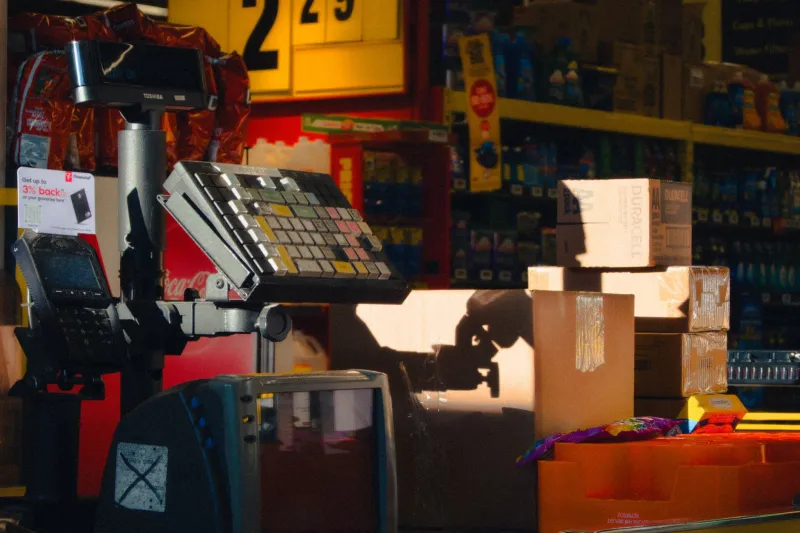
You don't think about the barcode. That's the whole point of it. You place your items on the belt, the cashier slides them over a glass window, something beeps, and the number appears. The entire exchange takes less than a second. It is, by any reasonable measure, one of the most seamlessly integrated pieces of technology in everyday American life — so smooth, so invisible, that it's easy to assume it was always welcomed.
It was not. The barcode had one of the most hostile public debuts in retail history. And it nearly didn't survive it.
A Solution Looking for Buy-In
The Universal Product Code — the specific barcode format still used on virtually every consumer product sold in America — was standardized in 1973 after years of industry negotiation. Grocery chains, manufacturers, and trade groups had spent the better part of a decade trying to agree on a single scanning system that could be shared across the entire retail supply chain. The logic was straightforward: if every product carried the same machine-readable code, checkout lines would move faster, inventory tracking would become automatic, and stores would save enormous amounts of money on labor.
The first commercial use of the system happened on June 26, 1974, at a Marsh Supermarket in Troy, Ohio — a small city just north of Dayton. The item scanned was a ten-pack of Wrigley's Juicy Fruit gum, priced at 67 cents. The transaction worked. A receipt printed. History was made, at least technically.
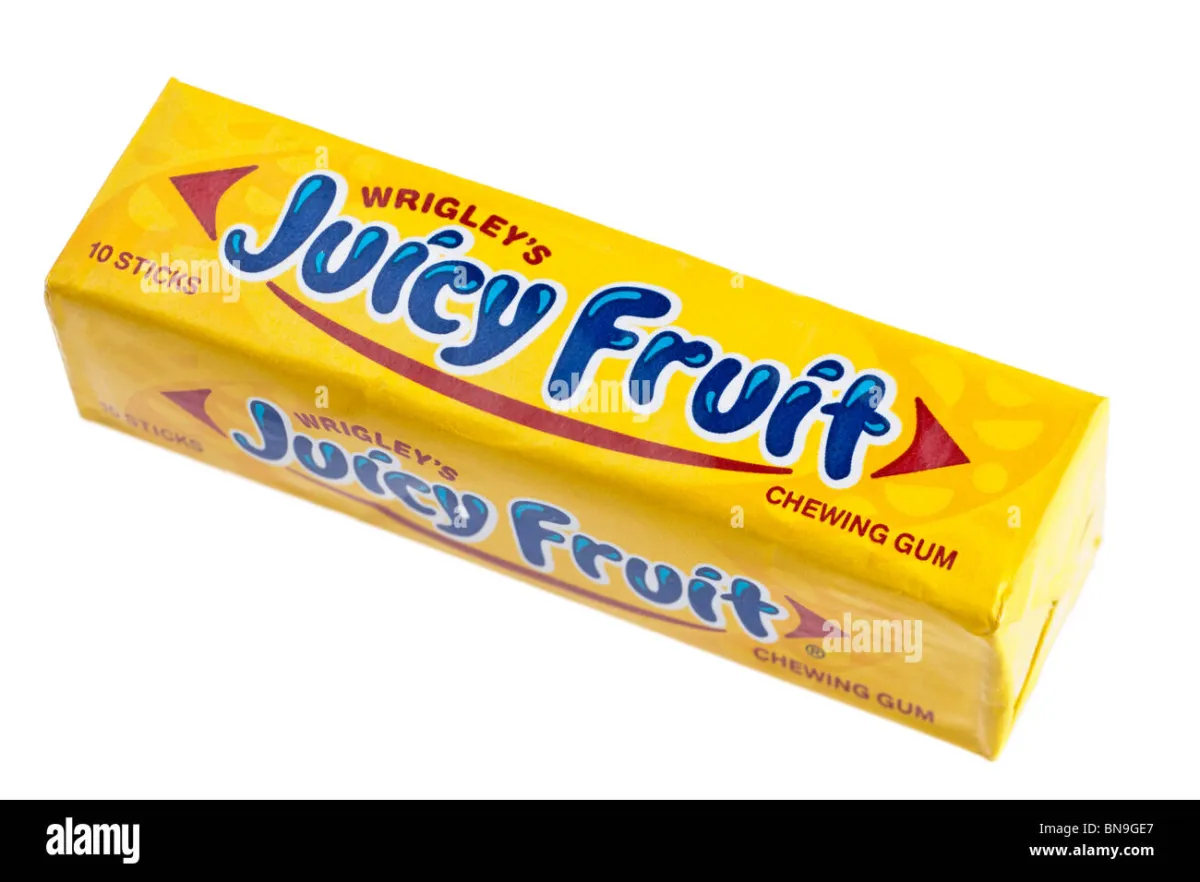 Photo: Wrigley's Juicy Fruit, via c8.alamy.com
 Photo: Troy, Ohio, via artoffrozentime.com
What happened next was less triumphant.
The Public Was Not Impressed
Almost immediately, the barcode ran into a wall of suspicion. Consumer advocacy groups raised alarms about price transparency. Under the old system, every item on a store shelf had a physical price sticker attached to it — you could see exactly what you were paying before it reached the register. Barcodes, critics argued, allowed stores to remove those stickers and rely entirely on shelf tags, which could be changed without customers noticing. The word "price-fixing" started circulating in newspapers and at town halls.
Labor unions took an even harder line. The United Food and Commercial Workers and affiliated locals saw the scanning technology for what it partly was: a tool that would reduce the need for human labor. Faster checkout meant fewer cashiers. Automated inventory meant fewer stockroom employees. Several local unions threatened strikes if stores moved forward with implementation. Some did strike. A handful of major chains quietly shelved their scanning pilot programs rather than deal with the disruption.
By the mid-1970s, the barcode was technically available, widely understood to be efficient, and deeply unpopular. Surveys from the period showed that a majority of American shoppers didn't trust it. Congressional hearings were held. Legislation was proposed in multiple states that would have required physical price stickers to remain on every product regardless of whether the store used scanning technology — a requirement that would have made the whole system economically pointless.
The barcode was, for a moment, genuinely in danger of dying in the marketplace.
The Manager Who Wouldn't Quit
What saved it was less a corporate strategy than a series of patient, local demonstrations. Store managers who believed in the technology kept their systems running and invited skeptical customers to watch transactions happen in real time. They printed detailed receipts. They kept shelf tags updated. They answered questions.
The Marsh store in Troy, Ohio — the site of that first scan — became something of a proving ground. Store management treated transparency as the answer to suspicion, letting reporters and consumer advocates examine the system directly rather than defending it from a distance. Slowly, the hostility started to soften.
Other retailers followed the same approach: make the process visible, make the receipt legible, and let the speed speak for itself. As checkout lines at scanning stores moved noticeably faster than those at traditional stores, consumer opinion began to shift from suspicion to mild preference. By the late 1970s, the anti-barcode legislation proposals had mostly stalled. By the early 1980s, the technology was expanding rapidly.
What the Resistance Left Behind
It's worth noting that the critics weren't entirely wrong. The removal of individual item price stickers did create some consumer confusion, and several states — including Michigan and California — passed laws requiring item-level pricing in specific retail contexts that remain on the books today. The union concerns about labor displacement were also accurate in the long run, even if the timeline was slower than feared.
But the barcode survived, expanded, and eventually became so embedded in commerce that imagining its absence is nearly impossible. Today, the global barcode scanning system processes more than five billion transactions every single day. It underpins supply chains, hospital medication tracking, airline boarding, library systems, and package delivery. The Wrigley's gum that started everything is long gone, but the infrastructure it inaugurated is as close to invisible and indispensable as technology gets.
The Lesson in the Beep
The barcode's rocky introduction is a useful reminder that even the most obviously practical technologies don't get adopted on logic alone. People need to trust what they can't see. They need to feel like the system is working for them rather than around them. The cashiers and store managers who patiently demonstrated the scanning process, one transaction at a time, did something that no amount of industry lobbying or congressional testimony could: they made it feel normal.
That quiet normalization is, in the end, how most things become invisible. Not through triumph, but through repetition — one beep at a time.