Tied to Something Bigger: The Surprising Power Hidden in a Simple Apron
Pick up almost any apron and you'll find the same basic design: a piece of fabric with strings. Nothing complicated. Nothing that suggests a particularly interesting past. And yet that strip of cloth has spent centuries doing something far more significant than catching sauce splatter.
Before it moved into the kitchen, the apron was one of the most loaded symbols in Western culture — a marker of who you were, what you did, and where you stood in the social order.
Before the Kitchen, There Was the Guild
The apron's story starts not at a stovetop but on the workshop floors of medieval Europe. Craftsmen wore aprons as a form of professional identity long before they were associated with cooking. Blacksmiths, cobblers, carpenters, butchers — each trade developed its own version, often in specific materials or colors that signaled membership in a particular guild.
The leather apron worn by a blacksmith wasn't just protective gear. It was a credential. In a world before business cards or LinkedIn profiles, what you wore to work communicated your training, your rank, and your right to practice a trade. Journeymen wore different aprons than masters. Materials mattered. Length mattered. Even how you tied it carried meaning within certain guilds.
Surgeons were among the more surprising early apron wearers. Before the age of sterile technique, a doctor's apron was routinely stained with blood — and that was considered a mark of experience rather than something to be embarrassed about. The more worn and used the apron appeared, the more it implied a busy, practiced hand.
The Freemasons formalized the apron into outright ceremony. White lambskin aprons became central to Masonic ritual, symbolizing purity of intention and the honest labor of the stonemason tradition the organization drew its imagery from. Some of those aprons were elaborate, embroidered with symbols and worn only at specific gatherings. George Washington was buried in one.
How the Apron Crossed the Atlantic
When European settlers brought their craft traditions to colonial America, the apron came with them. In early American households, the garment split into two distinct worlds. In the workshop, it remained a professional tool — worn by tradespeople who built, repaired, and made things by hand. In the home, it migrated to the kitchen and became primarily associated with domestic labor.
That shift wasn't neutral. As the apron became more closely linked to housework, it gradually shed the prestige it had carried in the trades. The same garment that once signaled a guild master's authority became shorthand for unpaid domestic labor, worn almost exclusively by women who had no choice in the matter.
By the late 19th and early 20th centuries, the apron had become so thoroughly domesticated in the American imagination that its earlier professional associations were largely forgotten. Department stores sold them in floral prints. Home economics textbooks included instructions for sewing your own. The apron had been quietly demoted.
The Garment That Fought Back
What happened next is where things get interesting.
The second half of the 20th century saw two very different groups reclaim the apron as a deliberate symbol — and for almost opposite reasons.
For parts of the feminist movement in the 1960s and 70s, the apron became a prop in a larger argument about domestic labor and women's autonomy. Burning or rejecting the apron was a visual shorthand for rejecting the expectation that women existed primarily to serve the household. The garment's symbolic weight made it useful precisely because everyone understood what it represented.
But another reclamation was happening at the same time, one that would ultimately reshape how Americans saw the apron entirely. The rise of celebrity chefs — starting with Julia Child in the early 1960s and accelerating through the Food Network era of the 1990s and 2000s — put the apron back on television in a completely different context. These were professionals. Experts. People who wore an apron not because they had to but because they were serious about what they were doing.
When a chef like Julia Child tied on her apron on national television, she was performing a kind of authority. The garment signaled competence, not servitude. That distinction changed everything.
The Apron's Modern Reinvention
Today, the apron occupies a genuinely strange cultural space. It's simultaneously a gift shop staple printed with jokes about grilling, a high-end leather accessory sold by artisan brands for two hundred dollars, a uniform element in some of America's most acclaimed restaurants, and a symbol that still carries enough political charge to appear in protest imagery.
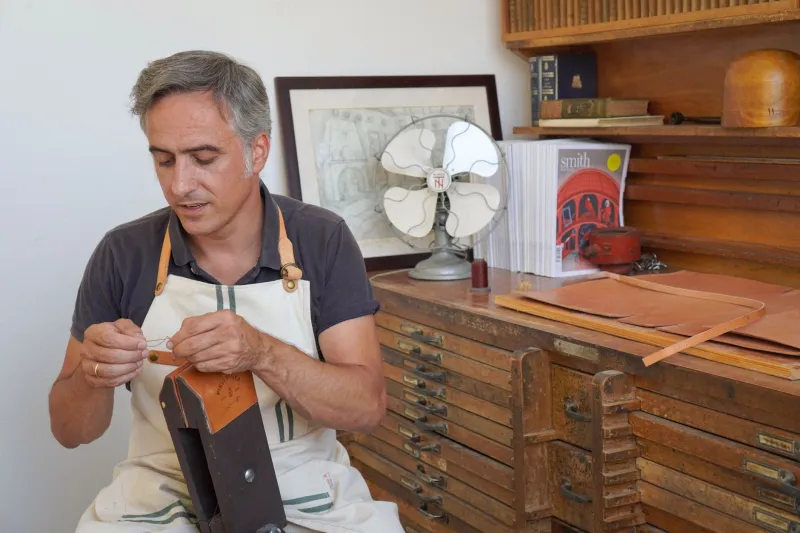
The craft revival of the 2010s brought the apron back into workshops — pottery studios, woodshops, home breweries — which quietly reconnected it to its pre-kitchen origins. Wearing an apron while making something by hand became a statement about slowing down, about valuing skilled work, about taking the process seriously.
Baristas wear them. Butchers wear them. Farmers market vendors wear them. Each version carries a slightly different message about craft, care, and identity.
What's remarkable is how much freight one piece of fabric has managed to carry across so many centuries and contexts. The apron has been a professional credential, a tool of domestic control, a feminist symbol, a chef's badge of honor, and an artisan's calling card — sometimes all within the same decade.
Next time you tie one on, you're wearing something with a longer and stranger history than almost anything else in your kitchen.