The Tablecloth That Started a Billion-Dollar Industry
Most great industries begin with a problem someone desperately needed to solve. Dry cleaning began with a man who knocked something over.
The story is almost too convenient to believe, but it checks out: in Paris in 1855, a dye-works owner named Jean Baptiste Jolly accidentally tipped a lamp filled with turpentine onto a soiled tablecloth. He probably said something unprintable in French. But when he came back to assess the damage the next morning, he found something unexpected — the fabric wasn't ruined. The area where the turpentine had soaked through was actually cleaner than the rest of the tablecloth.
Jolly, to his enormous credit, recognized what he was looking at. He didn't mop it up and move on. He started experimenting.
The Science Hiding in the Accident
What Jolly had stumbled onto was a basic principle of chemistry that nobody had yet thought to apply to fabric care. Water — the standard cleaning agent of the era — works by dissolving water-soluble substances. But many of the things that stain clothing, particularly grease, oil, and wax-based compounds, don't dissolve in water at all. They need a solvent, something chemically different, to break them down.
Turpentine, it turned out, was excellent at dissolving exactly those kinds of stains. The fabric came out cleaner not despite the spill but because of it.
Jolly opened what is widely considered the first dry cleaning establishment in Paris, calling the process "nettoyage à sec" — dry cleaning — because unlike conventional laundering, it used no water. The name was slightly misleading (the fabric was still getting wet, just with solvent rather than water), but it stuck.
Word spread quickly among Parisian tailors and their well-dressed clientele. Wool suits that couldn't survive a water wash without shrinking or distorting could be cleaned without damage. Silk that water would ruin came out intact. For the first time, expensive garments had a reliable cleaning option that didn't involve destroying them.
Crossing the Atlantic
The technique reached the United States within a few decades, initially spreading through immigrant communities and tailoring shops in major cities. Early American dry cleaners used a rotating cast of solvents — gasoline, benzene, kerosene — all of which worked reasonably well and all of which were also highly flammable. Early dry cleaning shops had a habit of catching fire, which created some obvious practical problems.
The industry's big safety breakthrough came in the 1930s with the adoption of perchloroethylene, or "perc" — a synthetic solvent that cleaned effectively without the fire risk. Perc became the industry standard almost overnight, and its adoption allowed dry cleaning shops to move out of industrial areas and into neighborhoods. The corner dry cleaner became a fixture of American commercial life.
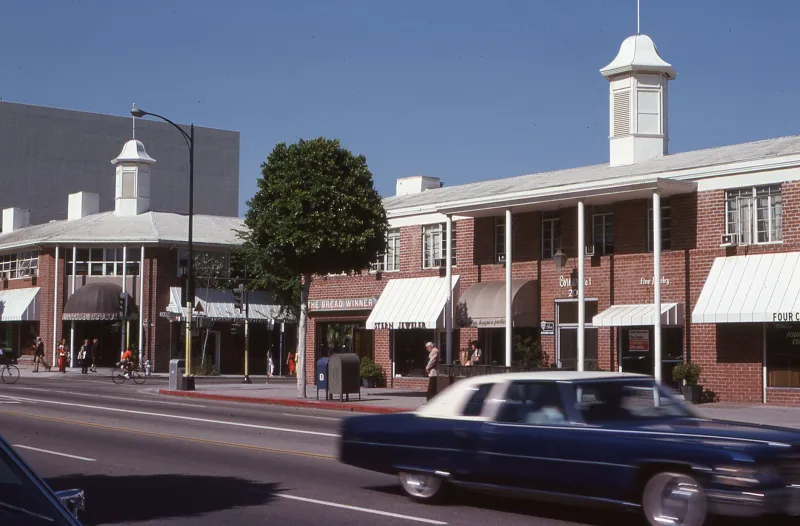
By the mid-20th century, dry cleaning shops were embedded in the fabric of American cities and suburbs in a way that's easy to take for granted now. They anchored strip malls. They occupied ground-floor retail spaces in apartment buildings. In cities like New York and Chicago, they were as common as pharmacies.
The Garment That Made Dry Cleaning Necessary
The rise of dry cleaning didn't happen in a vacuum — it grew alongside the rise of the American suit.
The wool business suit became the dominant garment of American professional life in the late 19th and early 20th centuries, and wool suits cannot be washed in water without significant damage. They shrink. They lose their shape. The structured elements — shoulder padding, interfacing, lapel construction — collapse. A suit that goes through a conventional wash often comes out unwearable.
Dry cleaning was, in a very practical sense, what made the suit possible as a mass-market garment. Without a reliable way to clean them, suits would have remained luxury items owned by people wealthy enough to replace them frequently. Dry cleaning democratized the suit by making it maintainable.
The same logic applied to formal dresses, military uniforms, wedding gowns, and the full range of structured, delicate, or heavily constructed garments that defined American professional and social dress for most of the 20th century. Dry cleaning didn't just clean clothes — it extended their usable life significantly, which made investing in quality garments more financially rational.
The Neighborhood Anchor
At their peak in the mid-20th century, American dry cleaning shops were doing something that went beyond garment care. They were community institutions. Owners knew their customers by name, knew their wardrobes, knew which suits needed extra attention at the collar and which dresses had to be handled carefully because of beading that could snag.
The industry peaked in the 1990s with somewhere around 35,000 shops operating across the country. Then it started contracting, driven by a combination of forces: the shift toward casual dress in American workplaces, the rise of machine-washable synthetic fabrics, environmental concerns about perc (which turned out to be a significant health and environmental hazard), and the general decline in the kind of formal dressing that required professional cleaning.
The number of dry cleaners in the US has dropped substantially since that peak, and the industry continues to evolve — some shops have shifted toward wet cleaning with gentler detergents, others toward newer solvent technologies, and a growing number have moved into pickup-and-delivery models that skip the storefront entirely.
What a Spilled Lamp Left Behind
Jean Baptiste Jolly almost certainly had no idea what he'd set in motion when he knocked over that lamp in 1855. He was trying to run a dye-works, not launch a global industry.
But that accidental discovery — the observation that a solvent spill had cleaned rather than ruined a piece of fabric — led directly to an industry that shaped how Americans maintained their wardrobes, extended the life of their clothes, and thought about the relationship between what they wore and how they presented themselves to the world.
Not bad for a clumsy moment and a ruined tablecloth.