How a Simple School Dance Became a Billion-Dollar Fashion Event
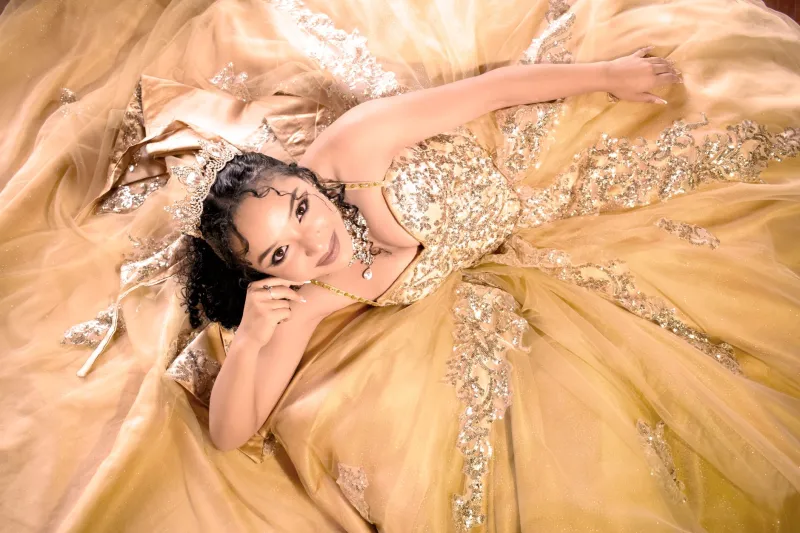
Somewhere in America right now, a high school junior is stressing about a dress. The color has to be right. The silhouette has to photograph well. The shoes need to be ordered six weeks out. The whole event — prom — carries a weight that feels ancient, like it must have been this way forever.
It wasn't. The prom as Americans experience it today is a surprisingly recent invention, and the people most responsible for shaping it weren't school administrators or well-meaning parents. They were fashion executives who spotted a market opportunity.
It Started With Dinner
The word "prom" is a shortening of "promenade," and the earliest versions of the event had almost nothing in common with what high school students experience today. In the late 19th century, proms were formal dining events held at Ivy League universities — Harvard, Yale, Princeton — where upperclassmen would host underclassmen for a ceremonial dinner followed by dancing. The whole thing was modeled on European debutante traditions and carried a strong whiff of upper-class social ritual.
Think white gloves. Formal table settings. Very little drama about what anyone was wearing because everyone was already in the same narrow social world.
The event slowly trickled down to state colleges and then, by the early 20th century, began appearing in high schools. But these early high school proms were modest affairs — a gymnasium decorated with crepe paper, a local band, punch that was definitely not spiked. The emphasis was on supervised socializing, not spectacle. A school dance, essentially, with a fancier name.
For the first several decades of its high school existence, the prom was unremarkable enough that most graduates probably forgot it within a year.
The Postwar Shift That Changed Everything
World War II ended, and America came home ready to spend. The economy boomed. Suburbs expanded. And something else happened that would transform the prom forever: teenagers became a demographic.
Before the postwar period, adolescence wasn't really treated as a distinct cultural category with its own tastes, spending habits, and identity. Kids moved more directly from childhood to adult responsibility. But the postwar prosperity bubble created something new — a generation of young people with more free time, more disposable income from after-school jobs, and more cultural visibility than any previous generation of American teenagers had enjoyed.
Marketers noticed immediately.
The garment industry, flush from wartime production contracts and looking for new revenue streams in peacetime, identified the teenage girl as an underserved customer. She wasn't buying the same clothes as her mother. She didn't have the budget for couture. But she had money, she had social events, and she cared enormously about how she looked at those events.
Prom was the perfect vehicle.
When the Fashion Industry Discovered Prom Night
Through the 1950s, department stores and dress manufacturers began treating prom as a seasonal retail event with the same intentionality they applied to Easter or Christmas. Magazines like Seventeen — launched in 1944 and aimed squarely at the teenage girl consumer — ran dedicated prom fashion spreads that told readers not just what to wear but how to think about the event. The messaging was clear: prom was a milestone, and milestones required the right dress.
This was a deliberate construction. The industry didn't simply respond to demand — it helped manufacture the emotional stakes that created the demand in the first place. By framing prom as a once-in-a-lifetime social performance, fashion brands ensured that buying a new dress wasn't optional. It was the entire point.
The physical silhouettes of the era reinforced this. The full-skirted, cinched-waist ball gown that became the iconic prom dress of the 1950s wasn't a practical garment. It wasn't something you'd wear again. It was a costume for a specific occasion, which made it commercially perfect — it couldn't be repurposed, so it had to be replaced.
The Arms Race Accelerates
Each subsequent decade layered more onto the prom experience. The 1970s and 80s brought polyester, bigger hair, and the slow creep of limousines. By the 1990s, the prom industrial complex had expanded well beyond the dress itself. Corsages, professional photography packages, pre-prom dinners at sit-down restaurants, after-parties — each element became its own revenue stream.
Television and film accelerated the mythology. Movies like Carrie (1976), Pretty in Pink (1986), and She's All That (1999) turned prom into a dramatic set piece, a crucible of teenage identity where social hierarchies were confirmed or upended. Hollywood's version of prom was always more heightened than reality, but it fed back into reality in a feedback loop that kept raising the stakes.
By the early 2000s, American families were spending an average of over a thousand dollars per student on prom-related expenses. Today that number is closer to fifteen hundred dollars, and in some markets considerably more. The total annual spend on prom in the United States now runs into the billions.
A School Event That Outgrew the School
What's striking about the prom's evolution is how thoroughly it escaped the institution that technically hosts it. Schools set the date and rent the venue, but the commercial apparatus around prom operates almost entirely independently — driven by bridal industry offshoots, formal wear retailers, beauty services, and a media culture that continues to treat the event as a major life milestone.
The modest gymnasium dance that existed in 1920 and the elaborate production that exists today share almost nothing except the name. One was a school event. The other is a fashion industry calendar date that happens to take place near a school.
The gym teacher who first chaperoned a high school prom probably couldn't have imagined that the evening would eventually generate more fashion revenue than most adult social occasions. But then, they also weren't trying to sell anyone a dress.