A Cold Gym, a Boxer, and the Accidental Invention of the Comfort Uniform
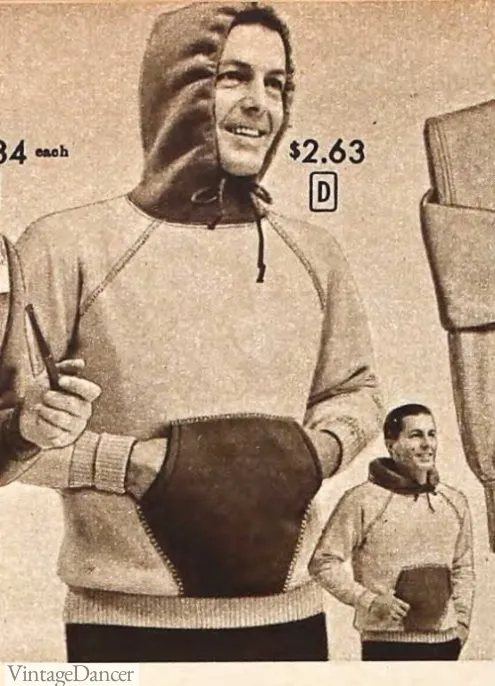
Photo: vintage sweatshirt athletic training gym 1950s, via vintagedancer.com
Somewhere in America right now, millions of people are wearing sweatshirts to places that have nothing to do with sweating. They're wearing them to coffee shops, to airports, to first dates, to Zoom calls, to grocery stores at 9 p.m. on a Tuesday. The sweatshirt has become, without much fanfare or formal announcement, the default garment of American casual life.
And it started with a boxer who was cold.
The Problem Was Simple: Gyms Were Freezing
In the early 1920s, professional boxing training happened in conditions that most modern athletes would find unacceptable. Gyms were unheated, drafty, and often located in basements or converted industrial spaces. Fighters training in the winter dealt with cold air that made warming up difficult and staying loose between rounds nearly impossible.
The standard athletic wear of the era — cotton undershirts and loose shorts — offered almost nothing in terms of insulation. Fighters would layer wool sweaters over their training gear, but wool was heavy, restrictive, and uncomfortable when it got wet. It was also expensive enough that many fighters couldn't afford quality versions.
The story most closely associated with the sweatshirt's origin involves Benjamin Russell Jr., whose father ran Russell Manufacturing in Alexander City, Alabama. The company made underwear and athletic gear. According to accounts passed down through the Russell family, Benjamin Jr. — a football player at the University of Alabama — grew frustrated with the scratchy, heavy wool jerseys worn during cold-weather practice. He went to his father and asked a simple question: could they make something warmer and softer out of cotton?
The answer was yes. The result, developed in the early 1920s, was a thick, looped-cotton fleece garment that absorbed sweat, retained warmth, and moved with the body instead of against it. It was called a sweatshirt — named, straightforwardly, for what it was designed to do.
Boxing Adopted It First
Athletes across sports took to the new garment quickly, but boxing culture embraced it with particular intensity. The sweatshirt was ideal for training: it kept muscles warm between rounds, absorbed the considerable sweat generated during sparring sessions, and could be pulled on and off quickly. Fighters started wearing them during roadwork — the early-morning running sessions that were central to boxing conditioning — and the image of a boxer in a hooded or crewneck sweatshirt became part of the sport's visual identity.
This is where the garment started accumulating meaning beyond its function. Boxing, especially in the 1920s and 1930s, was a working-class sport. Its gyms were in poor neighborhoods. Its fighters were often immigrants or the children of immigrants, men who trained in cold rooms because that's where the training happened. The sweatshirt was their garment — practical, unpretentious, and built for effort.
That association with physical labor and genuine exertion would follow the sweatshirt for decades. It wasn't clothing for leisure. It was clothing for work — the hard, unglamorous kind.
The GI Effect and the College Campus
World War II changed a lot of things about American clothing, and the sweatshirt was no exception. Military training programs adopted the garment widely — it was cheap to produce, easy to launder, and genuinely useful for physical conditioning in cold conditions. Millions of American men wore sweatshirts during their service years, and when they came home, they brought the habit with them.
College campuses became the next staging ground. Universities had been printing their names on athletic gear for years, but the postwar enrollment boom — driven largely by returning veterans on the GI Bill — created a massive new market for campus merchandise. The crewneck sweatshirt, printed with a school name or mascot, became a standard piece of college identity. It was affordable, comfortable, and wearable by almost everyone.
By the 1950s, the sweatshirt had made a quiet but significant transition: it was no longer exclusively athletic gear. It was casual wear. The distinction mattered. Clothing worn for exercise had crossed over into clothing worn for comfort, and that crossing was a big deal.
The 1970s and the Comfort Revolution
If the postwar era normalized the sweatshirt, the 1970s transformed it. The fitness boom of that decade — jogging, aerobics, recreational sports — brought athletic clothing out of the gym and onto the street in an entirely new way. People were exercising as a lifestyle choice, not just as part of a sport or a job, and they wanted clothing that reflected that.
The sweatshirt was perfectly positioned. It was already associated with athletic effort. It was already comfortable. And it was cheap enough that wearing it casually didn't feel wasteful. The decade saw the garment move from training rooms to living rooms, from college campuses to suburban households, from the wardrobe of athletes to the wardrobe of everyone.
Fashion noticed. By the late 1970s and early 1980s, designers were starting to take the sweatshirt seriously as a canvas. Screen printing had become sophisticated enough to turn the front of a crewneck into a billboard. Brands, bands, universities, and eventually fashion houses all saw the potential. The sweatshirt was now a medium.
Athleisure and the Final Takeover
The word "athleisure" wasn't coined until the 2010s, but the concept had been building for decades. The idea was simple: clothing designed for athletic activity could be worn everywhere, and the comfort it offered was a feature, not a compromise.
The sweatshirt was athleisure before athleisure had a name. It had always been athletic clothing worn in non-athletic contexts. The industry finally caught up to what consumers had been doing all along, and the result was a multi-billion-dollar market realignment that put comfort at the center of American fashion.
Brands like Champion — the same company that had been making athletic fleece since the 1930s — suddenly found themselves at the center of a fashion moment. Their vintage crewnecks, which had been selling in sporting goods stores for decades without much fanfare, became coveted items. The sweatshirt's working-class, athletic origin story became part of its appeal.
The Garment That Never Pretended
What's striking about the sweatshirt's rise is how little it changed to achieve it. The basic construction — thick cotton fleece, ribbed cuffs, loose fit — is nearly identical to what Russell Manufacturing was producing a century ago. The garment didn't evolve into something more refined or aspirational. The culture evolved toward it.
That might be the most interesting part of the story. In an industry that constantly chases the new, the sweatshirt won by staying exactly what it was: warm, honest, and built for effort. The boxer who first pulled one on in a cold gym wasn't making a fashion statement. He was just trying to stay loose.
Turns out, that was enough.