The Tucked-In Shirt Has a Stranger Origin Than You Think
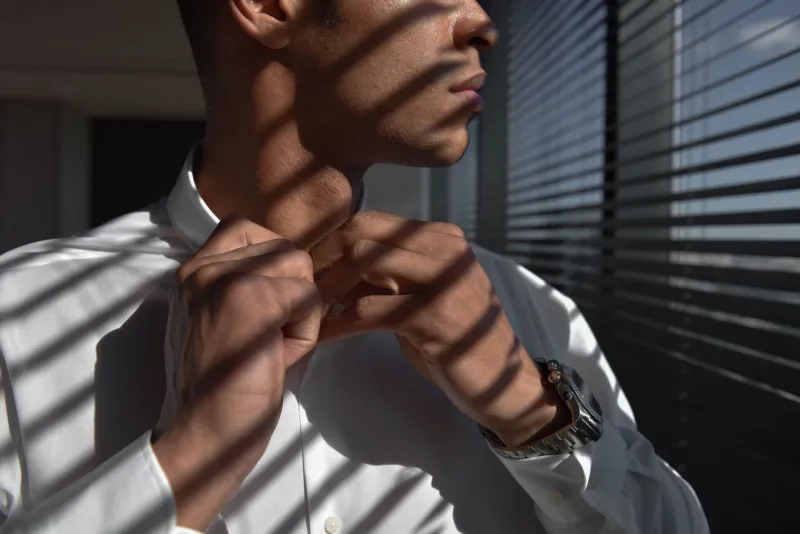
Somewhere along the line, tucking in your shirt became one of those things that just meant you were serious. Serious about the job interview. Serious about the dinner reservation. Serious about being the kind of person who had their life together. The untucked shirt, by contrast, read as careless, young, maybe a little suspect in the wrong setting.
But where did that association actually come from? The answer involves military drill sergeants, 19th-century factory supervisors, and a particular kind of class performance that Americans have been doing for over a hundred years without quite realizing it.
Shirts Weren't Always Tucked In
For most of human history, the shirt as a garment was essentially underwear. In medieval Europe and through much of the early modern period, the shirt was worn beneath outer garments — it was an underlayer, not something meant to be seen. When it was worn on its own, the length and the cut weren't designed for tucking. Shirts were long, loose, and meant to hang.
The concept of tucking came later, as outer clothing changed and the shirt began to function as a visible garment rather than a hidden one. But even into the 18th century, whether a shirt was tucked or untucked depended heavily on the activity, the garment, and the class of the person wearing it. There was no universal rule.
What changed everything was two things happening at roughly the same time: the rise of organized military culture and the Industrial Revolution.
The Military Contribution
Armed forces have always had a complicated relationship with clothing. Uniforms exist to communicate rank, inspire group identity, and signal discipline. In that context, the tucked-in shirt wasn't just about neatness — it was about control. A soldier with a crisp, tucked uniform was a soldier who had submitted to the order of the institution. An untucked shirt was, quite literally, a sign of insubordination.
The U.S. military formalized this in the 19th and early 20th centuries, with dress codes that specified exactly how clothing should be worn, down to the position of shirttails. Military academies like West Point trained generations of American men in the habit of tucking, and those men carried the association between tucked shirts and authority into civilian life when they left the service.
This wasn't just an American phenomenon — the British military had similar standards, and European military culture had influenced dress codes across the Western world for centuries. But in the United States, where military service touched enormous numbers of men across two World Wars, the tucked shirt became deeply embedded in the national idea of what looking "right" meant.
The Factory Floor and the Foreman's Eye
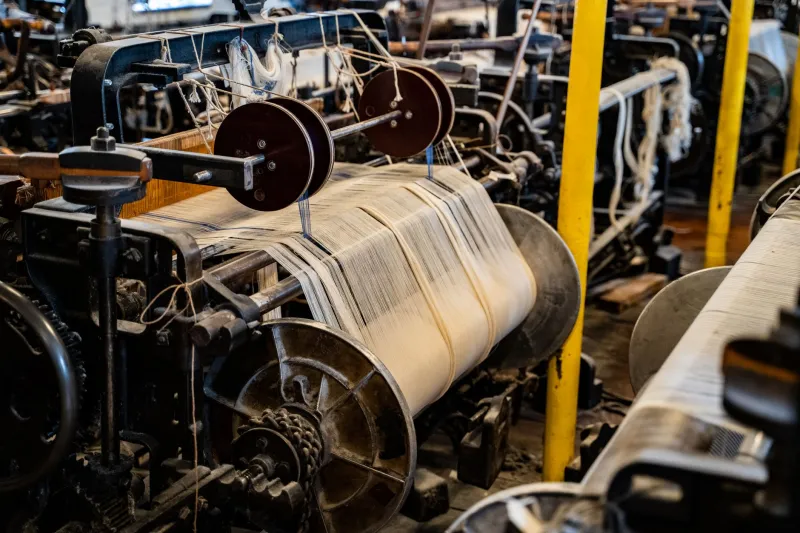
At the same time the military was drilling the tuck into American men, the Industrial Revolution was creating a different but parallel pressure. Factory work was physically demanding and often dangerous. Loose clothing around machinery was a genuine hazard — untucked shirts could catch on equipment in ways that caused serious injury.
Factory supervisors and early industrial safety culture pushed for tucked shirts as a practical matter. The tuck kept fabric close to the body and out of the way of gears, belts, and moving parts. Over time, this practical requirement became a workplace norm that extended beyond safety. A tucked shirt signaled that you were ready to work, that you took the job seriously, that you weren't going to be a problem.
For the working-class men who made up the industrial labor force in the late 19th and early 20th centuries, tucking in was less a fashion choice than a condition of employment. Foremen noticed. Supervisors made judgments. The tucked shirt became a small but legible signal of reliability.
Class, Anxiety, and the White-Collar Tuck
Here's where it gets more interesting. By the early 20th century, the tucked shirt had acquired a specific class meaning that went beyond its military or industrial origins. The white-collar worker — the office clerk, the bank teller, the salesman — adopted the tucked shirt as a way of distinguishing himself from the manual laborer, even when both were tucking for related reasons.
The office worker's tuck was about aspiration. It said: I work with my mind, not my hands. I am neat because I am not doing anything that would make me un-neat. The suit jacket reinforced this — a properly buttoned jacket over a tucked shirt was the visual grammar of American professional respectability through most of the 20th century.
Department stores, men's magazines, and early corporate dress codes all reinforced this language. By mid-century, the tucked shirt was so thoroughly associated with professional seriousness in America that deviating from it required a conscious statement. When the counterculture of the 1960s and 70s went untucked, it was understood as a rejection of exactly those values — the corporate, the conformist, the buttoned-up.
Why It Still Means Something
The tuck never fully went away, but its meaning has shifted. The tech industry's casual dress culture, the rise of streetwear, and changing office norms have all chipped away at the tucked shirt's dominance. Today, whether you tuck or don't is as much a style signal as a social one — a message about which professional tribe you belong to, which aesthetic you're aligned with.
But the old associations haven't disappeared entirely. A job interview in a traditional industry, a formal dinner, a courtroom — these are still contexts where the tucked shirt carries weight, where the untucked option reads as a statement rather than a neutral choice.
That's the strange persistence of a habit that came from drill sergeants and factory floors. Nobody sits down to think about military discipline or industrial safety when they decide whether to tuck their shirt. But the reasons are still there, stitched into the association itself, doing their quiet work every time someone tucks in before walking through an important door.