The Tag That Wouldn't Behave: Inside the Quiet War Between Clothing Labels and the People Who Hate Them
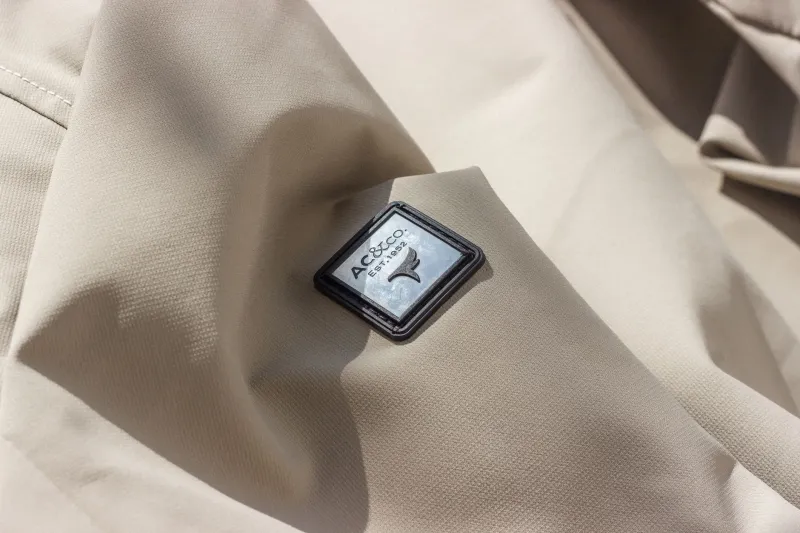
At some point in your life, you have almost certainly reached behind your own neck and yanked a tag out of a shirt. Maybe you used scissors. Maybe you just pulled until the stitching gave way. Either way, you've participated in one of the most quietly universal rituals in American clothing culture — the removal of a label that was never supposed to bother you this much.
Here's the thing: it wasn't always like this. And the fact that tags ended up where they did, sewn into the back of your collar in a way that seems almost designed to irritate, is the result of a series of decisions made by manufacturers, regulators, and retailers that had almost nothing to do with your comfort.
Where Labels Came From in the First Place
Clothing labels as we know them are a relatively modern invention. For most of human history, clothes were made by hand — by the person wearing them, by a family member, or by a local tailor who already knew exactly whose coat he was making. There was no need to attach a note explaining who made it or what it was made of.
The Industrial Revolution changed that. As clothing factories scaled up production in the nineteenth century and garments began moving through retail stores to anonymous buyers, manufacturers started attaching labels as a form of branding. A label meant you knew where the shirt came from. It was a quality signal, a mark of origin, a tiny advertisement sewn directly into the product.
In the early days, these labels were often placed visibly — on the chest, the cuff, or the outer surface of a collar. The brand wanted to be seen. If you were wearing a well-made shirt from a reputable manufacturer, the label was part of the appeal. It told the world something about you.
This began to shift in the early twentieth century as ready-to-wear clothing became more standardized and the idea of brand visibility moved in and out of fashion. Labels migrated inward, toward the collar or the side seam, where they were less conspicuous but still present.
The Government Gets Involved
For a long time, labels were purely voluntary — manufacturers used them for marketing, and that was that. Then the U.S. government stepped in.
The Textile Fiber Products Identification Act of 1960 required that clothing sold in the United States include labels disclosing fiber content. The Wool Products Labeling Act had come earlier, in 1939, specifically targeting wool content claims. The Care Labeling Rule, introduced by the Federal Trade Commission in 1971, added another layer — garments now had to include instructions for washing, drying, and ironing.
Suddenly, labels weren't just marketing. They were legal requirements. And because the collar was already an established location for brand tags, the care and content information got stacked right there with it. The result was often a dense little rectangle of text pressed directly against the back of your neck.
Nobody officially complained about this in any organized way. There was no label rebellion, no congressional testimony about scratchy polyester tags. But the discomfort was real, widespread, and quietly building.
The Scratch Heard Round the Collar
By the 1980s and 1990s, the tag problem had become something clothing manufacturers were actively aware of. Consumer feedback — informal, persistent, never quite loud enough to make headlines — consistently flagged collar labels as a source of irritation. The issue was particularly acute with athletic wear and children's clothing, where tags in motion against skin became genuinely uncomfortable over time.
The solutions came gradually and from different directions.
One approach was simply to make the tags softer. Woven satin labels replaced the coarser materials that had been standard for decades. This helped, but didn't eliminate the problem — even a soft label stitched at the corner could fold, curl, and scratch.
The more radical solution was to move the information off the tag entirely and print it directly onto the fabric. Screen printing and heat transfer technology had existed for years, but applying it to care and content labeling required a shift in thinking. Labels existed because information needed to be communicated — but the label itself was just the delivery method. If you could print that information directly onto the garment's inner surface, the tag became unnecessary.
Nike began experimenting with tagless construction in the early 2000s. Hanes launched its tagless undershirt line in 2003, making it a central marketing point. The response was immediate and enthusiastic — consumers responded to the promise of no tag the way they might respond to a minor miracle. The tagless movement spread quickly through athletic wear, basics, and eventually into broader apparel categories.
Why Tags Still Exist at All
If printing technology can put all the required information directly on the fabric, why do woven tags still show up in so much clothing? The answer is mostly a combination of manufacturing habit, cost, and the fact that printed labels can fade with washing in ways that woven ones don't.
There's also a branding consideration. A woven label with a raised logo feels premium in a way that a printed interior stamp doesn't, which is why high-end manufacturers often keep their brand tags even while removing the care label. The brand tag is meant to be touched, noticed, associated with quality. The care label was always just a legal obligation.
What's genuinely strange, looking back, is how long the uncomfortable tag persisted without anyone treating it as a real problem worth solving. It scratched millions of necks for decades. It was universally disliked. And it stayed exactly where it was until the technology to remove it became cheap enough to justify the change.
Sometimes the most obvious fixes are the last ones anyone gets around to making.