Teeth, Tape, and Thirty Years of Failure: The Slow, Grinding Birth of the Zipper

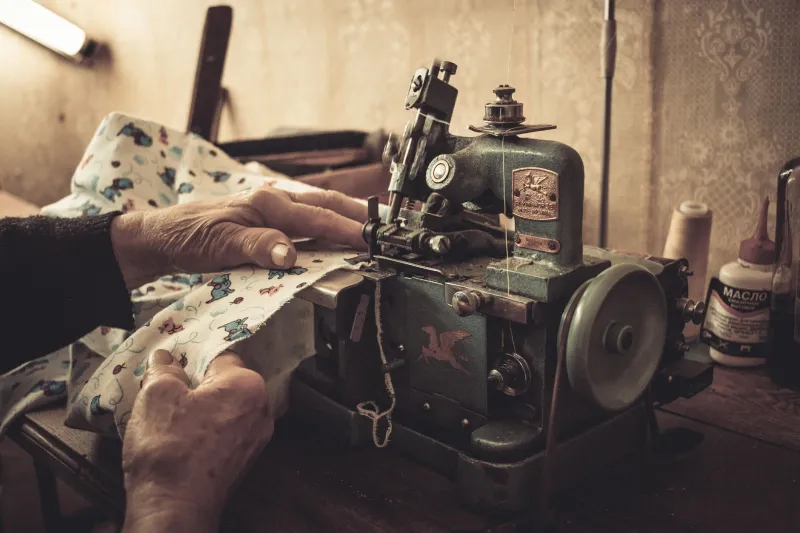
Photo by Photo by Marcus Urbenz on Unsplash on Unsplash
Every time you zip up a jacket without thinking about it, you're benefiting from one of the most stubbornly difficult engineering problems in the history of clothing. The zipper looks simple. It is not. And the story of how it got from a half-working prototype on a Chicago stage to the fastener on virtually every pair of jeans in America is a story about failure, obsession, and the particular kind of persistence that most rational people would call madness.
It starts in 1893, at the World's Columbian Exposition in Chicago — one of the most significant cultural events in American history, a fair that introduced the Ferris wheel, Cracker Jack, and the dishwasher to the American public. It also introduced something called the "clasp locker," a device invented by a Chicago engineer named Whitcomb Judson.
Almost nobody noticed.
The First Attempt Was a Disaster
Judson's clasp locker was designed to solve a genuinely annoying problem: fastening boots. In the 1890s, high-buttoned boots were standard footwear, and doing them up required a small hook tool and several minutes of patience. Judson envisioned a slide mechanism that could do the same job in a single motion.
What he built was a chain of hooks and eyes that a sliding clasp could connect or disconnect. On paper, it made sense. In practice, it was unreliable, prone to popping open unexpectedly, and difficult to manufacture consistently. The U.S. Postal Service ordered twenty of them for mail pouches. Most jammed or failed. The order wasn't repeated.
Judson spent the next decade trying to improve the design with his business partner Lewis Walker. They formed a company, moved it from Chicago to Hoboken to Meadville, Pennsylvania, filed multiple new patents, and burned through investors' money at a rate that would make a modern startup founder wince. By 1905, they had a slightly better product and essentially no market. Judson died in 1909 having never seen his invention succeed.
Enter the Engineer Who Wouldn't Quit
The person who actually made the zipper work was a Swedish-born engineer named Gideon Sundback, who joined Judson and Walker's company — by then called the Automatic Hook and Eye Company — in 1906.
Sundback was methodical in a way Judson hadn't been. He understood that the fundamental problem wasn't the concept — it was the tolerances. Every individual tooth in a zipper mechanism has to be precisely the same size and shape. The slider has to apply exactly the right amount of pressure. The tape holding the teeth has to be flexible but dimensionally stable. Any variation in any of those factors and the whole thing either jams or gaps open.
In 1913, after years of iteration, Sundback filed a patent for what he called the "Separable Fastener" — a design that used interlocking teeth rather than hooks and eyes, with a slider that meshed them together from below. It was, in all meaningful ways, the zipper as we know it today.
But knowing how to make it and actually making it were still two different things. Sundback also designed the manufacturing machinery required to produce the teeth at the precision the mechanism needed. That machine — which could stamp out hundreds of teeth per minute at consistent tolerances — was arguably as important as the fastener itself.
The Name Nobody Used Yet
For its first decade, Sundback's invention was still primarily sold to the military and for specialty applications — tobacco pouches, money belts, work boots. It remained a niche industrial product.
The word "zipper" didn't exist yet. That changed in 1923, when the B.F. Goodrich Company licensed the fastener for use on a new style of rubber galoshes. Goodrich's president, reportedly, loved the sound the fastener made when opening the boot — that satisfying zip — and named the product the "Zipper Boot." The trademark eventually became generic, and the mechanism got the name that stuck.
Even then, fashion was skeptical.
The clothing industry in the 1920s and early 1930s was deeply conservative about construction. Buttons had been the standard fastener for centuries. Tailors knew how to work with them. Buyers trusted them. The zipper was still seen as a gadget — fine for boots and bags, but not for serious clothing.
Fashion's Reluctant Conversion
The turning point came in the 1930s, pushed by two forces: children's clothing and competitive marketing.
In 1937, a trade publication called Esquire ran a feature declaring the zipper the fastener of the future, specifically praising its convenience for men's trousers. The piece was, by any modern standard, a bizarre piece of promotional copy — it argued that the zipper would eliminate the "possibility of unintentional and embarrassing disarray" caused by buttons. Whether the argument was medically sound is debatable. Whether it worked is not. Men's trouser manufacturers began adopting zippers almost immediately.
Children's clothing had already made the shift. The zipper's ease of use — particularly for small fingers learning to dress independently — made it an obvious choice for kids' garments. Parents loved it. Children's wear manufacturers adopted it widely through the mid-1930s, which meant an entire generation grew up with zippers as a normal, expected part of clothing.
By the time World War II created massive demand for functional, durable military gear, the zipper was embedded in American manufacturing. Military jackets, flight suits, and gear bags all used them. When soldiers came home and the surplus clothing market exploded, the zipper came with it.
What Forty Years of Failure Actually Built
The zipper's story is worth knowing because it complicates the myth of invention. We tend to imagine that useful things get adopted quickly — that if something genuinely works, the world recognizes it and moves on. The zipper's history suggests otherwise.
Judson's original concept was sound. The execution took four decades, two engineering overhauls, one obsessive Swedish machinist, a rubber boot company's marketing instinct, and a children's clothing industry willing to take a chance on something new.
The next time a zipper glides smoothly up your jacket without a second thought, consider what that effortlessness actually cost. Somewhere in Meadville, Pennsylvania, a man spent the better part of his life on a device most people thought was pointless. He was wrong about the pointless part. He was just about forty years early on everything else.