How a Throwaway Cup Became the Most Recognized Party Object in America
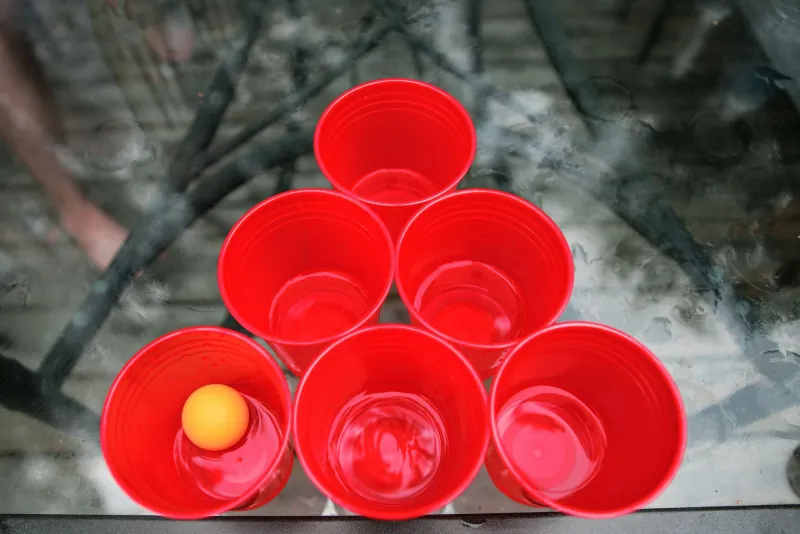
Walk into any party supply aisle in America and you'll find it — that unmistakable tower of red plastic cups stacked so high it practically leans. You don't need a label. You don't need a logo. You just know what it means. Someone is throwing a party, and you're probably invited.
But here's the thing nobody really stops to ask: where did this thing actually come from? And why red?
It Started With Paper, Not Plastic
The story of the Solo cup doesn't begin at a frat house. It begins in the early 1930s with a small Chicago-based company called the Solo Cup Company, founded by Leo Holt. At the time, the business was doing something far less glamorous than hosting parties — it was manufacturing disposable paper cups for industrial use. Factories, hospitals, and office buildings were the target customers. The pitch was simple: shared drinking glasses spread germs, so give workers something they could use once and toss.
It wasn't exactly a revolutionary idea. Disposable cups had been around since the early 1900s, largely driven by public health campaigns that warned about communal water dippers in schools and train cars. But Solo was carving out a specific niche — affordable, functional, and forgettable. That was the goal. Make a cup nobody thinks about.
For decades, it worked exactly as planned.
The Plastic Shift Nobody Noticed
Through the 1940s and 1950s, Solo expanded steadily, adding more products and refining its manufacturing process. The real shift came in the 1970s when the company began producing cups in plastic rather than paper. Plastic was cheaper to mass-produce, more durable during transit, and — crucially — it didn't get soggy. For a company selling to cafeterias and vending machine operators, that mattered a lot.
The iconic red color? It wasn't a branding masterstroke. It was a manufacturing decision. Red dye was cheap and consistent, and it made defects in the plastic harder to spot during quality checks. The cup came in other colors too — blue, yellow, and clear — but red was the workhorse of the production line because it was economical and reliable.
Nobody at Solo Cup Company was sitting in a boardroom imagining spring break in Florida. They were just trying to keep costs down.
The Accidental Adoption
Somewhere in the late 1970s and into the 1980s, something shifted. College students — notoriously budget-conscious and always in need of a drink vessel that could survive a crowded basement — started reaching for the red Solo cup. It was cheap, it was sturdy enough to hold a full pour, and it was opaque, which meant you couldn't easily tell what was inside. That last quality turned out to matter more than Solo ever anticipated.
Word spread the way things spread before the internet: slowly, organically, dorm room by dorm room, campus by campus. The cup became a fixture at tailgates, backyard cookouts, and house parties across the country. It wasn't marketed for any of this. Solo was still selling to hospitals and break rooms. The party market basically adopted the cup without asking.
By the time the 1990s arrived, the red Solo cup was so embedded in American party culture that it had crossed from object into symbol. It showed up in movies, TV shows, and eventually music videos as shorthand for a good time, an informal gathering, youth, and freedom. All that meaning loaded onto sixteen ounces of red plastic.
The Toby Keith Moment
If there's a single moment that cemented the cup's place in American mythology, it might be 2011, when country singer Toby Keith released a song simply called "Red Solo Cup." The track was goofy, deliberately simple, and absolutely relentless in its celebration of the cup as a life philosophy. It hit number one on the country charts and earned a Grammy nomination for Best Comedy Album when released as a standalone single package.
The song didn't create the cup's cultural status — that had been building for thirty years. But it named it. It made explicit what everyone already knew: this wasn't just a cup anymore. It was a ritual object.
Why This Cup, Though?
It's worth asking why the red Solo cup specifically achieved this status and not, say, a generic clear plastic cup or a paper one. Part of the answer is the color — red reads as festive and energetic in a way that clear or white simply doesn't. Part of it is the size — the standard 16-ounce cup is generous without being absurd. And part of it is the ridged design near the base, which gives you something to grip and — according to a viral internet theory that may or may not be accurate — supposedly marks measurements for beer, wine, and spirits at the 1, 5, and 12-ounce lines.
Solo has never officially confirmed that the ridges were designed as measurement guides. But the story spread anyway, because people wanted it to be true. That's what happens when an object earns enough cultural affection — people start inventing lore around it.
The Cup That Refused to Be Forgotten
In 2012, Solo Cup Company was acquired by Dart Container Corporation for around $1 billion. The brand continues today, still producing the same red cup that factory workers were once tossing into trash bins after a coffee break.
It's now estimated that Americans use billions of disposable cups annually, with the red Solo cup holding a near-mythological position in that market. It has been photographed more times than most pieces of intentional art. It shows up at Super Bowl parties, graduation celebrations, camping trips, and backyard barbecues from Maine to Arizona.
None of that was planned. A company trying to solve a sanitation problem in industrial break rooms accidentally handed America its most democratic party tradition — one cup, one gathering, no questions asked.