When Fire Met Wood: The Beautiful Mistake That Created America's Signature Spirit
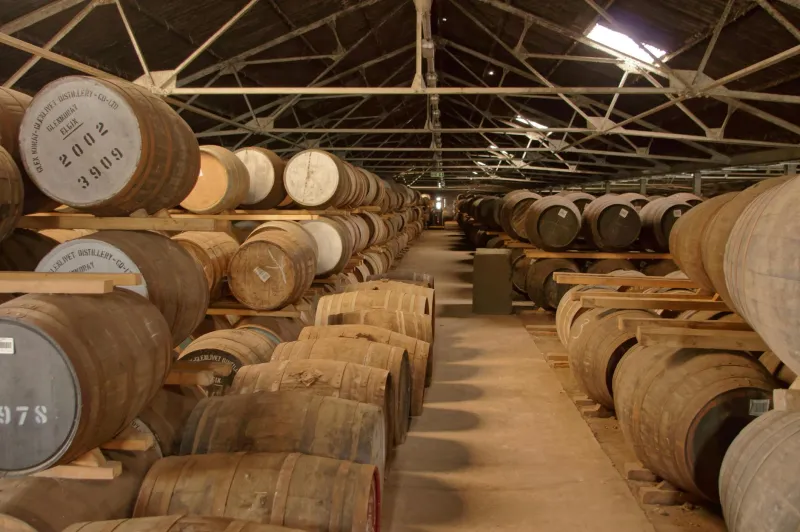
The Day Everything Went Wrong (And Right)
Sometime in the 1790s, in a wooden warehouse along the banks of the Kentucky River, someone made what should have been a catastrophic mistake. Barrels full of raw corn whiskey—clear, harsh, and about as smooth as drinking liquid sandpaper—sat stacked in neat rows, waiting to be shipped downriver to New Orleans. Then fire happened.
Not the kind of fire that burns everything to ash, but the slow, creeping kind that chars wood from the inside out. The warehouse didn't burn down, but those oak barrels? They got scorched. Badly. The insides turned black as coal, and any reasonable person would have thrown the whole batch away and started over.
But this was frontier Kentucky in the 1790s. You didn't throw away anything that might still be worth money.
The Long Journey That Changed Everything
What happened next was pure accident layered on top of accident. Those charred barrels, filled with what everyone assumed was ruined whiskey, got loaded onto flatboats anyway. The journey from Kentucky to New Orleans took months—a slow, winding trip down the Kentucky River to the Ohio, then south along the Mississippi.
For weeks, those barrels rocked back and forth in the summer heat, the harsh corn whiskey sloshing against the blackened wood. The charred oak began working its magic, pulling out the whiskey's rough edges and replacing them with something entirely different. The clear liquid turned amber, then gold, then the deep copper color we recognize today. The taste transformed from harsh to smooth, picking up notes of vanilla, caramel, and smoke.
By the time those barrels reached New Orleans, they contained something that had never existed before: bourbon whiskey.
The French Connection Nobody Saw Coming
Here's where the story gets even stranger. The whiskey that would become America's native spirit got its name from French royalty—specifically, from Bourbon County, Kentucky, which was named after the French House of Bourbon in gratitude for France's help during the Revolutionary War.
The merchants in New Orleans started calling this new, amber-colored whiskey "Bourbon County whiskey" to distinguish it from the clear, harsh stuff that usually came downriver. The name stuck, even as the actual production spread far beyond Bourbon County's borders. Today, bourbon can be made anywhere in the United States, but it still carries that French royal name—a reminder of an alliance most Americans have completely forgotten.
When Accidents Become Traditions
What started as a warehouse mishap quickly became the foundation of an entire industry. Distillers realized that the charring wasn't a bug—it was a feature. The burned wood acted like a natural filter and flavor enhancer, transforming raw corn whiskey into something people actually wanted to drink.
The process became so essential that today, by law, bourbon must be aged in new, charred oak barrels. What was once an accident became a legal requirement. The mistake became the method.
But the accidents didn't stop there. The specific combination of corn, rye, and barley that makes bourbon wasn't planned—it was just what grew best in Kentucky soil. The limestone-filtered water that gives bourbon its distinctive character? That was just what flowed from Kentucky springs. Even the climate played a role, with hot summers and cold winters causing the whiskey to expand and contract in the barrels, accelerating the aging process.
From Mistake to National Identity
By the mid-1800s, bourbon had become more than just a drink—it was becoming part of American identity. Unlike Scotch whisky or Irish whiskey, which had centuries of tradition behind them, bourbon was something entirely new, born from American ingenuity and happy accidents.
The Civil War only strengthened bourbon's reputation. Union and Confederate soldiers alike carried it in their flasks, and stories spread about its ability to steady nerves and warm bones during long, cold nights. After the war, as America began to see itself as a distinct culture separate from Europe, bourbon became a symbol of American authenticity.
In 1964, Congress made it official, declaring bourbon "America's Native Spirit" in a congressional resolution. A drink born from a warehouse fire and a shipping mistake had become so central to American culture that the government felt compelled to claim it as uniquely ours.
The Beautiful Accident That Won't Go Away
Today, bourbon is experiencing a renaissance that would amaze those first Kentucky distillers. Craft distilleries are popping up across the country, each trying to recreate and improve on that original accident. Premium bourbons sell for hundreds of dollars a bottle, and bourbon tourism brings millions of visitors to Kentucky every year.
But at its heart, bourbon is still the same beautiful mistake it was 230 years ago. Every bottle carries the DNA of that first warehouse fire—the charred oak, the accidental aging process, the transformation of something harsh into something smooth and complex.
The next time you see that amber liquid in a glass, remember: you're looking at one of history's most successful accidents, a mistake so perfect that we've been trying to recreate it ever since. Sometimes the best traditions aren't planned at all—they're just happy accidents that refuse to go away.