Two Decades of Failure: The Stubborn Little Fastener That Almost Never Made It
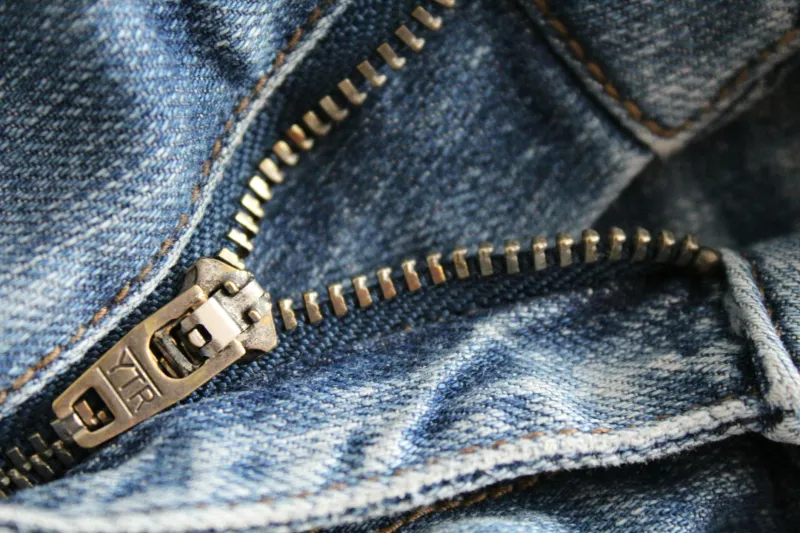
Two Decades of Failure: The Stubborn Little Fastener That Almost Never Made It
Every time you zip up a jacket, close a bag, or seal a pair of boots, you are completing a gesture so automatic it barely registers as a thought. The zipper is one of those inventions that feels like it must have always existed — a solution so obvious that it seems impossible anyone had to sit down and figure it out.
But someone did have to figure it out. And it took them, and several others after them, the better part of thirty years to get it right.
A World's Fair and a Shrug
The story starts in 1893, at the World's Columbian Exposition in Chicago — one of the grandest public spectacles of the nineteenth century. The fair introduced American audiences to everything from the Ferris wheel to alternating current electricity. It was, by any measure, an excellent place to launch an invention.
Whitcomb Judson, a Chicago mechanical engineer, thought so too. He arrived at the fair with a device he called the "clasp locker," a sliding fastener designed to replace the hook-and-eye closures used on boots and shoes. The concept was sensible: a row of interlocking teeth that could be opened and closed with a single pull. Judson had already filed a patent. He had a business partner. He had a booth.
Almost nobody cared.
The clasp locker attracted little public interest and even less commercial attention. Judson sold a modest number of units to the U.S. Postal Service for use on mail pouches — a deal that kept his company alive but hardly signaled a revolution in fastening technology. The device had a persistent problem: it popped open at inconvenient moments and jammed with maddening regularity. For a product designed to make life easier, it was making things considerably harder.
Judson spent the next several years trying to fix the design, filing additional patents and producing revised versions that were, incrementally, less terrible. None of them solved the fundamental problem. When Judson died in 1909, his clasp locker had been on the market for sixteen years and was still largely a curiosity.
The Swede Who Saved the Whole Thing
Enter Gideon Sundback, a Swedish-American engineer who joined Judson's company — by then called the Automatic Hook and Eye Company — in 1906. Sundback was methodical where Judson had been inventive, and he approached the failing fastener as an engineering problem to be solved systematically rather than a product to be marketed more aggressively.
The key insight Sundback eventually reached, after years of iteration, was about the teeth themselves. Earlier designs used hooks and eyes that interlocked in a relatively crude way. Sundback redesigned the individual components so that each tooth had a small dimple on one side and a corresponding nub on the other, allowing them to nest together more precisely and hold more securely under tension. He also increased the number of teeth per inch, creating a denser, more reliable connection.
In 1913, he filed a patent for what he called the "Separable Fastener." It worked. Not perfectly — nothing is perfect — but reliably enough to be genuinely useful. The modern zipper had arrived, more or less. It just needed someone to actually want it.
The Military Steps In
That someone turned out to be the U.S. military.
When America entered World War I, the armed forces were in the business of outfitting millions of men quickly and practically. Buttons were functional but time-consuming to manufacture and attach, and they came loose under hard use. The Navy began incorporating Sundback's fastener into flying suits and money belts. The Army followed. For the first time, the zipper — still not widely known by that name — was being produced at real scale and tested against real conditions.
The name itself arrived in 1923, courtesy of the B.F. Goodrich Company, which used Sundback's fastener on a new line of rubber galoshes and branded them "Zippers." The word was catchy. It stuck. Goodrich had intended it as a product name, not a generic term, but language rarely follows corporate intentions.
Buttons Fight Back
Even with military adoption and a memorable name, the zipper's path into everyday clothing was not smooth. The garment industry was slow to embrace it, partly out of habit and partly because button manufacturers had significant economic and political influence. Tailors were skeptical. Consumers were cautious.
The fashion world's full conversion to the zipper didn't happen until the 1930s, when designers including Elsa Schiaparelli began using visible zippers as decorative elements — a move that reframed the fastener as modern and sophisticated rather than merely functional. Children's clothing manufacturers adopted zippers enthusiastically, marketing them to parents as a way to help kids dress themselves. The argument was practical and it worked.
By the end of the decade, zippers were standard on trousers, dresses, luggage, and outerwear. The button, ancient and dignified, had lost its monopoly.
What Almost Didn't Happen
It is worth sitting with the fact that the zipper very nearly didn't make it. If Judson had been slightly less stubborn, or if Sundback hadn't joined the company, or if the military hadn't needed a faster way to dress soldiers, the whole trajectory changes. We might have spent another generation buttoning everything.
Instead, we got a fastener so reliable and universal that it now appears on roughly everything — from haute couture to hiking gear to the bag you carry to work every day. The zipper's twenty-year struggle to exist makes the ease with which we use it now feel almost like a small miracle.
Grab the pull. It opens in one motion. It always does.