Rivets, Ruin, and the Gold Rush Gamble That Invented America's Favorite Pants
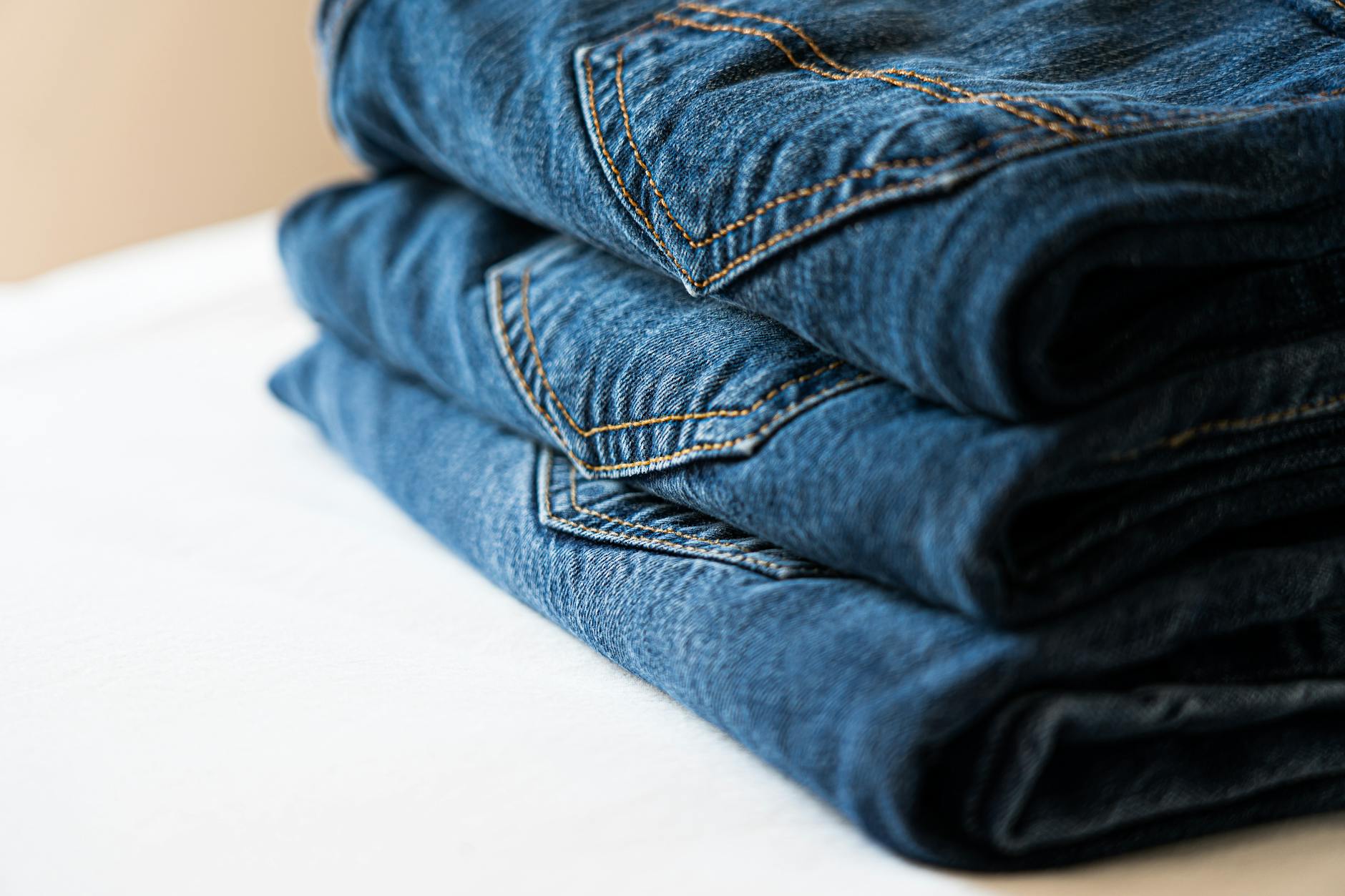
Rivets, Ruin, and the Gold Rush Gamble That Invented America's Favorite Pants
There's a good chance you're wearing them right now. Or you wore them yesterday. Or they're folded on a chair somewhere in your bedroom because they're technically clean enough for another round. Blue jeans are so embedded in American life that it's almost impossible to imagine a world without them — and yet, for most of human history, they simply didn't exist. The whole thing started not with a fashion designer or a textile visionary, but with a tailor in Nevada who was tired of angry miners showing up at his door with busted pants.
The Problem Nobody Talks About
By the early 1870s, the California Gold Rush had faded, but the mining industry across the American West was still booming. Men were working brutal, physical jobs — digging, hauling, crouching in tight shafts for hours at a stretch. The clothing of the era wasn't built for any of that. Standard work trousers, typically made from cotton or wool, wore out fast. The seams split. The pockets tore away. For a laborer whose entire livelihood depended on showing up and getting dirty, constantly replacing pants was both an expense and an annoyance.
Jacob Davis was a Latvian-born tailor working out of Reno who'd been making workwear for local laborers. He'd been buying his denim and canvas fabric from a dry goods merchant in San Francisco named Levi Strauss — a Bavarian immigrant who had come to California during the Gold Rush not to mine, but to sell supplies to the people who did. Davis had an idea to reinforce the stress points on his trousers — the corners of pockets, the base of the fly — using the same copper rivets a harness maker might use on leather. It worked. The pants held up in ways that nothing else had.
A Patent, a Partnership, and a Pair of Pants
Davis knew he had something. But he didn't have the $68 it cost to file a patent in 1872 — roughly $1,700 today. So he wrote to Levi Strauss with a proposition: fund the patent, and they'd share the invention together. Strauss said yes. On May 20, 1873, the two men received U.S. Patent No. 139,121 for "an Improvement in Fastening Pocket-Openings" — and just like that, the blue jean was born.
The earliest versions weren't called jeans at all. They were "waist overalls," and they came in two fabrics: a brown cotton duck canvas and a blue denim woven from cotton with indigo dye. The denim version — sturdier, more comfortable after a few washes, and cheaper to produce — quickly became the more popular option. That deep indigo color, which hid dirt and faded gracefully with wear, became the signature look we still associate with the garment today.
From Work Gear to Cultural Icon
For the first several decades of their existence, jeans were strictly working-class clothing. Cowboys wore them. Farmers wore them. Railroad workers wore them. They were practical, not fashionable — a tool as much as a garment. The idea of wearing denim by choice, rather than necessity, hadn't really entered the cultural conversation yet.
That started to shift in the 1930s, when dude ranches became a popular vacation trend among East Coast tourists who wanted to play cowboy for a week. They came home with jeans, and suddenly the garment had a romantic, rugged association that went beyond manual labor. Hollywood picked up on it fast. Western films turned denim into shorthand for American toughness, independence, and freedom. By the time James Dean wore a pair in Rebel Without a Cause in 1955, jeans weren't just work clothes anymore — they were a statement.
Teenagers adopted them as a form of rebellion. Schools and workplaces banned them, which only made them more appealing. Through the 1960s and '70s, denim absorbed the counterculture — bell-bottoms, patches, embroidery, protest marches, Woodstock. By the 1980s, designers like Calvin Klein had moved jeans onto the runway and into advertising campaigns that made them aspirational in an entirely different way. The garment had traveled from a Nevada tailor's workbench to the pages of Vogue in just over a century.
Why It Still Matters
What's remarkable about the blue jean story isn't just the invention itself — it's how completely the garment outgrew its original purpose. Davis and Strauss solved a very specific, very unglamorous problem: pants that fell apart. They weren't trying to create a cultural artifact. They were trying to keep miners from complaining.
And yet denim became the most democratic fabric in American fashion history. It's been worn by presidents and prisoners, rock stars and retirees, toddlers and grandparents. It crosses income levels, generations, and subcultures in a way that almost nothing else does. You can spend $30 on a pair at a big-box store or $500 on a Japanese selvedge cut from a boutique, and both people are wearing the same basic idea that Jacob Davis sketched out in Reno in 1872.
The copper rivets are still there, by the way. Check the corners of your front pockets next time. Levi's never removed them. Some things, it turns out, don't need improving.