The Coffee That Saved the War (And Ruined Your Morning Standards Forever)
The Spill That Started Everything
Satori Kato wasn't trying to revolutionize American mornings when he accidentally knocked over his coffee experiment in Chicago, 1901. The Japanese-American chemist had been working on a completely different project—trying to create a tea concentrate for export back to Japan. But when his coffee solution spilled and dried on the lab bench, leaving behind a brown powder that dissolved instantly in hot water, he'd stumbled onto something that would eventually caffeinate millions of soldiers and change how an entire country starts its day.
Kato's "soluble coffee" was born from pure accident, but it would take a world war to make it essential.
When Desperation Met Innovation
By 1917, the U.S. military had a serious problem. Shipping fresh coffee beans to troops scattered across European battlefields was expensive, slow, and took up precious cargo space. Worse, brewing real coffee required time, equipment, and safety that frontline soldiers simply didn't have. You can't exactly set up a proper coffee service when you're dodging artillery fire.
Enter George Washington—not the president, but a Belgian-American inventor who had refined Kato's process into something the military could actually use. His "G. Washington's Prepared Coffee" became the official coffee of American forces, and suddenly millions of young men were drinking instant coffee not by choice, but by necessity.
The military loved it because it was lightweight, shelf-stable, and required nothing more than hot water. Soldiers tolerated it because it was caffeine, and caffeine was survival.
The Taste of Victory (Sort Of)
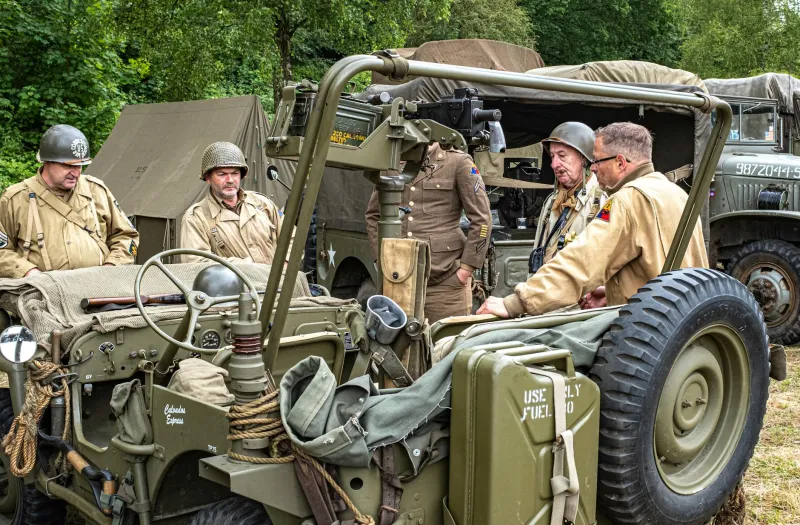
World War II turned instant coffee from military convenience into industrial necessity. Nestlé, working with the U.S. government, perfected freeze-drying technology specifically to supply Allied forces with better-tasting instant coffee. The company was literally shipping millions of pounds of the stuff to troops across two theaters of war.
But here's where the story gets interesting: these soldiers weren't just drinking instant coffee—they were developing a relationship with it. In foxholes and field hospitals, on transport ships and in temporary barracks, instant coffee became associated with comfort, warmth, and the promise of making it through another day. It wasn't gourmet, but it was reliable.
When those same soldiers returned home after 1945, they brought their coffee habits with them.
The Civilian Invasion
Post-war America was ready for convenience. Women were entering the workforce in unprecedented numbers, suburban life was accelerating, and nobody had time for the elaborate coffee rituals their grandparents had practiced. Instant coffee fit perfectly into this new reality—quick, consistent, and foolproof.
By 1950, instant coffee represented nearly half of all coffee consumed in American homes. Companies like Folgers and Maxwell House poured millions into advertising campaigns that positioned instant coffee not as a wartime substitute, but as modern sophistication. "Good to the last drop" wasn't talking about freshly ground beans—it was selling the convenience of crystals in a jar.
The morning ritual that had once involved grinding, brewing, and waiting was compressed into thirty seconds and a spoon.
The Quiet Revolution
What's remarkable isn't that instant coffee succeeded—it's how completely it rewired American expectations about morning routines. Before World War II, coffee was something you made. After the war, coffee was something you prepared. The difference might seem subtle, but it fundamentally changed how Americans thought about the relationship between time, convenience, and daily rituals.
Instant coffee democratized caffeine in a way that fresh-brewed coffee never could. It worked in office break rooms, college dorm rooms, and anywhere else people needed caffeine but lacked the infrastructure for "real" coffee. It was the great equalizer—terrible for everyone, but equally terrible.
The Snob Backlash and the Stubborn Survival
By the 1960s, coffee purists were mounting a counterrevolution. The rise of espresso culture, gourmet coffee shops, and eventually the Starbucks empire positioned instant coffee as the enemy of "real" coffee appreciation. Coffee became a marker of sophistication again, and instant coffee became something you apologized for serving.
But here's the thing: instant coffee never actually went away. It just went underground. While coffee culture exploded into a billion-dollar industry of specialty drinks and artisanal roasting, instant coffee quietly maintained its grip on American mornings. Today, roughly 35% of Americans still drink instant coffee regularly—they just don't brag about it.
The Accident That Keeps Giving
Satori Kato's laboratory mishap in 1901 didn't just create a product—it created a template for how convenience could trump quality in American consumer culture. Instant coffee proved that speed and reliability could matter more than craftsmanship, especially when scaled across millions of daily routines.
That lesson echoes through everything from fast food to streaming entertainment: sometimes "good enough, right now" beats "perfect, eventually." Kato's accidental powder became the prototype for instant everything.
So the next time you're standing in your kitchen at 6 AM, spooning crystals into a mug because you're too tired to figure out the coffee machine, remember: you're participating in a morning ritual that was literally born from a spilled experiment and militarized by global warfare. It's not sophisticated, but it's survived nearly 125 years for a reason.
Some accidents just refuse to be corrected.