Copper, Canvas, and a California Gold Rush: How Blue Jeans Were Born by Accident
Copper, Canvas, and a California Gold Rush: How Blue Jeans Were Born by Accident
There's a good chance you're wearing them right now. Or you wore them yesterday. Or they're folded in a drawer three feet away. Blue jeans are so woven into American life that most of us never stop to wonder where they actually came from. The answer involves a frustrated tailor, a dry goods merchant, and a very specific problem: pants that kept ripping apart at the seams.
The Man With the Problem
In the early 1870s, a Latvian-born tailor named Jacob Davis was running a small shop in Reno, Nevada. The area was still buzzing with the energy of the mining boom, and his customers were working men — laborers, miners, and ranchers who needed clothing that could actually hold up on the job.
One customer in particular kept coming back with the same complaint. His pants were tearing. Specifically, the pocket corners and the seams near the waist kept blowing out under the strain of hard physical work. Davis tried heavier fabric. He tried tighter stitching. Nothing held.
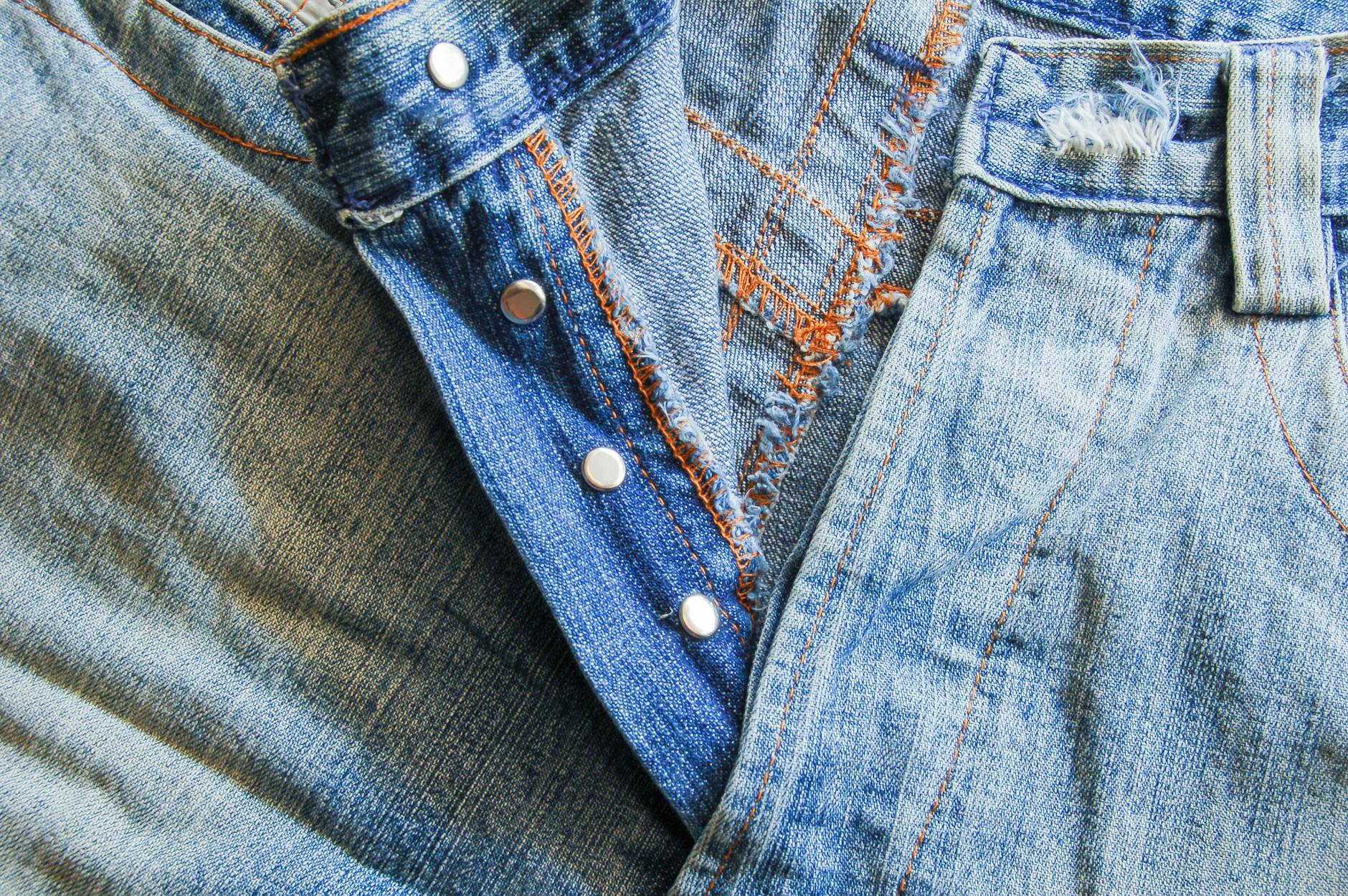
Then, one day in 1871, he had an idea. He picked up some copper rivets — the kind typically used to fasten horse blankets and tack — and hammered them into the stress points of the pants. The result was immediate and obvious. The rivets reinforced exactly where the fabric was failing. The pants held.
Word got around fast. Miners and laborers loved them. Davis started selling riveted work pants as quickly as he could make them, and demand kept climbing.
Enter Levi Strauss
Here's where the story gets a little more complicated — and a lot more interesting.
Davis was buying his denim fabric from a dry goods wholesaler in San Francisco named Levi Strauss. Strauss had arrived in the US from Bavaria in 1847 and eventually made his way west, setting up a wholesale business supplying merchants across California and Nevada. Davis was one of his regular customers.
When Davis realized he had something genuinely valuable on his hands, he wanted to patent the riveted pants design. But he didn't have the money to file for a patent on his own. So he wrote a letter to Strauss, laying out exactly what he'd invented and proposing a partnership. The pitch was simple: you front the patent costs, we split the rights.
Strauss agreed. On May 20, 1873, the United States Patent Office granted patent number 139,121 to Jacob Davis and Levi Strauss & Co. for "an Improvement in Fastening Pocket-Openings." That date is now officially recognized as the birthday of blue jeans.
From Work Site to Wardrobe
For the first several decades of their existence, jeans were purely utilitarian. They were workwear, plain and simple — sold to miners, cowboys, farmers, and railroad workers who needed something tough enough to survive the job. The denim was stiff, the fit was boxy, and nobody was wearing them for style.
That started to shift in the 1930s, when dude ranches became a fashionable vacation destination for East Coast tourists. City dwellers heading out west for a taste of cowboy life came home with jeans in their luggage, and suddenly the garment had a new kind of appeal — one tied to rugged American freedom rather than hard labor.
The real turning point came after World War II. Returning veterans had grown comfortable in casual clothing during their service years, and they weren't eager to go back to rigid dress codes. Jeans fit the mood. James Dean wore them in Rebel Without a Cause in 1955. Marlon Brando had already made them look dangerous in The Wild One a year earlier. Jeans became the unofficial uniform of youth rebellion, and from that point on, there was no going back.
The Rivet That Changed Everything
What's remarkable about the whole story is how small the original innovation actually was. Jacob Davis didn't invent denim. He didn't design a new cut or develop a new fabric. He hammered a few copper rivets into a pair of pants to stop them from tearing. That's it.
But that tiny fix solved a real problem for real people, and that's exactly how a lot of lasting things get started. The rivet made the pants durable enough to matter. The durability created demand. The demand attracted a business partner with the resources to scale it. And somewhere along the line, a piece of workwear became a cultural artifact.
Today, the global denim market is worth well over $70 billion. Jeans have been worn by presidents, rock stars, and astronauts. They've been banned in schools, embraced by high fashion, and deconstructed by designers charging four figures for a single pair.
And it all traces back to a tailor in Reno who was just trying to stop a miner's pockets from falling off.
Next time you zip up a pair, those little copper rivets at the corners of your pockets are still there — doing exactly what Jacob Davis put them there to do, over 150 years ago.