When Two Engineers Tried Making Fancy Wallpaper and Accidentally Created America's Favorite Stress Toy
The Wallpaper Dream That Popped
Picture this: It's 1957, and two engineers in New Jersey are convinced they're about to change how Americans decorate their homes. Alfred Fielding and Marc Chavannes have what they think is a brilliant idea—textured wallpaper that'll give any room a modern, three-dimensional look. Their plan? Seal two plastic shower curtains together and create something with visual pop.
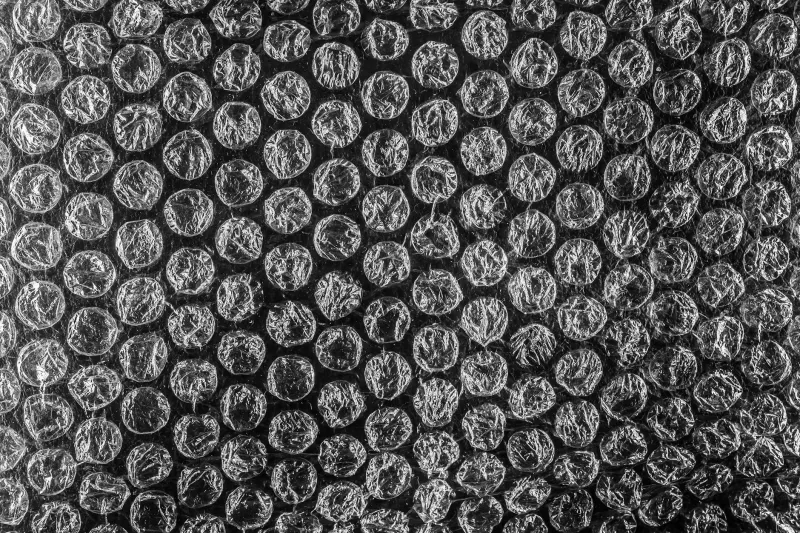
What they got instead was a sheet covered in air-filled bubbles that looked nothing like sophisticated home décor. By any reasonable measure, their experiment was a complete failure. The wallpaper market wasn't interested, and their creation seemed destined for the trash heap of bad ideas.
Except Alfred and Marc weren't ready to give up on their accidental invention just yet.
From Home Décor Flop to Greenhouse Gold
When the wallpaper industry gave them the cold shoulder, the duo pivoted hard. Maybe their bubble-filled creation couldn't beautify walls, but what about protecting plants? They pitched it as greenhouse insulation—a way to trap warm air and keep delicate crops cozy during cold snaps.
This actually worked. Sort of. Gardeners and commercial growers found the material useful, but it wasn't exactly setting the world on fire. Fielding and Chavannes had created a niche product for a small market. They called their company Sealed Air Corporation and settled in for what looked like a modest business serving agricultural customers.
But the universe had bigger plans for their bubble-covered mistake.
IBM Changes Everything
The breakthrough came in 1961 when IBM approached Sealed Air with an unusual request. The computer giant was shipping their new 1401 computer system—a massive, delicate machine that cost more than most people's houses—and needed something to protect it during transport.
Traditional packaging materials like newspaper or foam peanuts weren't cutting it. These expensive computers were arriving damaged, and IBM was hemorrhaging money on replacements and repairs. They needed something that could cushion heavy equipment while being lightweight enough not to drive shipping costs through the roof.
Fielding and Chavannes' failed wallpaper turned out to be perfect. The air-filled bubbles created thousands of tiny shock absorbers, distributing impact across the entire surface. Better yet, the material was light—since it was mostly air—keeping shipping weights manageable.
IBM became Sealed Air's first major customer, and suddenly everyone in the shipping industry wanted to know about this miracle packaging material.
The Pop Heard 'Round the World
As Bubble Wrap—the name they eventually settled on—spread through warehouses and shipping departments across America, something unexpected happened. People couldn't stop popping the bubbles.
Workers would spend their breaks methodically working their way across sheets of the stuff, pressing each bubble until it burst with that satisfying little "pop." Office managers found employees lingering near shipments, absent-mindedly squeezing bubbles while talking on the phone.
What started as procrastination turned into a cultural phenomenon. The simple act of popping Bubble Wrap triggered something primal in the human brain—a combination of the satisfaction of completing a small task and the stress relief that comes from repetitive action.
Psychologists later confirmed what office workers already knew: popping Bubble Wrap actually reduces stress and anxiety. The rhythmic nature of the activity, combined with the mild physical exertion and the predictable sensory feedback, creates a meditative effect that helps people decompress.
More Than Just Packaging
By the 1980s, Bubble Wrap had transcended its utilitarian origins. Artists incorporated it into sculptures and installations. Teachers used it for science experiments about air pressure and surface tension. Parents discovered that kids would play with Bubble Wrap longer than expensive toys.
The material even found its way into fashion, with designers creating avant-garde dresses and accessories from the stuff. It appeared in movies as a visual shorthand for moving day or fragile cargo. Late-night TV hosts made jokes about Bubble Wrap addiction.
In 2001, someone created National Bubble Wrap Appreciation Day (the last Monday in January), giving Americans official permission to indulge their popping obsession. The holiday caught on, with offices and schools hosting bubble-popping contests and stress-relief sessions.
The Invention That Won't Die
Today, Sealed Air Corporation is a billion-dollar company, and Bubble Wrap remains their flagship product. Despite decades of attempts to create "better" packaging materials, nothing has matched Bubble Wrap's combination of effectiveness, affordability, and sheer universal appeal.
The company has tried to innovate—they've created versions that don't pop (for people who find the sound annoying) and biodegradable alternatives for environmentally conscious customers. But classic Bubble Wrap, with its satisfying poppable bubbles, remains the gold standard.
Why Failure Sometimes Wins
The story of Bubble Wrap reveals something fascinating about innovation: sometimes the best inventions are the ones nobody intended to create. Fielding and Chavannes set out to solve a problem that didn't really exist—who was desperately seeking textured wallpaper?—and accidentally solved problems they didn't even know about.
Their "failed" wallpaper became the perfect packaging material, stress reliever, and cultural touchstone all rolled into one. It outlasted countless intentional inventions from the same era, proving that sometimes the universe knows what it needs better than the inventors do.
The next time you receive a package wrapped in those familiar sheets of air-filled bubbles, remember: you're looking at one of history's most successful failures, a wallpaper dream that became something much more satisfying than anyone ever imagined.