Before the Candy Corn and Costumes, Halloween Was Something Much Stranger
Before the Candy Corn and Costumes, Halloween Was Something Much Stranger
Let's be honest: Halloween in America is a spectacle. It's the second-largest commercial holiday in the country, generating over $12 billion a year in spending on costumes, decorations, and candy. People dress their dogs up. Entire neighborhoods go full haunted house. There are adults who start planning their outfits in July. And yet almost nobody stops to ask the obvious question — why are we doing this? Why, specifically on October 31st, do we put on disguises and wander around in the dark?
The answer stretches back further than you'd probably expect, and it's considerably stranger than anything you'd find at a Spirit Halloween.
The Night the Boundary Dissolved
Around 2,000 years ago, the Celtic peoples of what is now Ireland, Scotland, and northern France observed a festival called Samhain (pronounced sah-win). It marked the end of the harvest season and the beginning of the dark half of the year — the Celtic new year, essentially, falling on November 1st.
But the night before, October 31st, was considered a threshold moment. The Celts believed that on this one night each year, the boundary between the living world and the realm of the dead became dangerously thin. Spirits — not necessarily friendly ones — could cross over and wander among the living. Dead ancestors might return. Malevolent entities might cause illness, destroy crops, or generally make life difficult for anyone unlucky enough to encounter them.
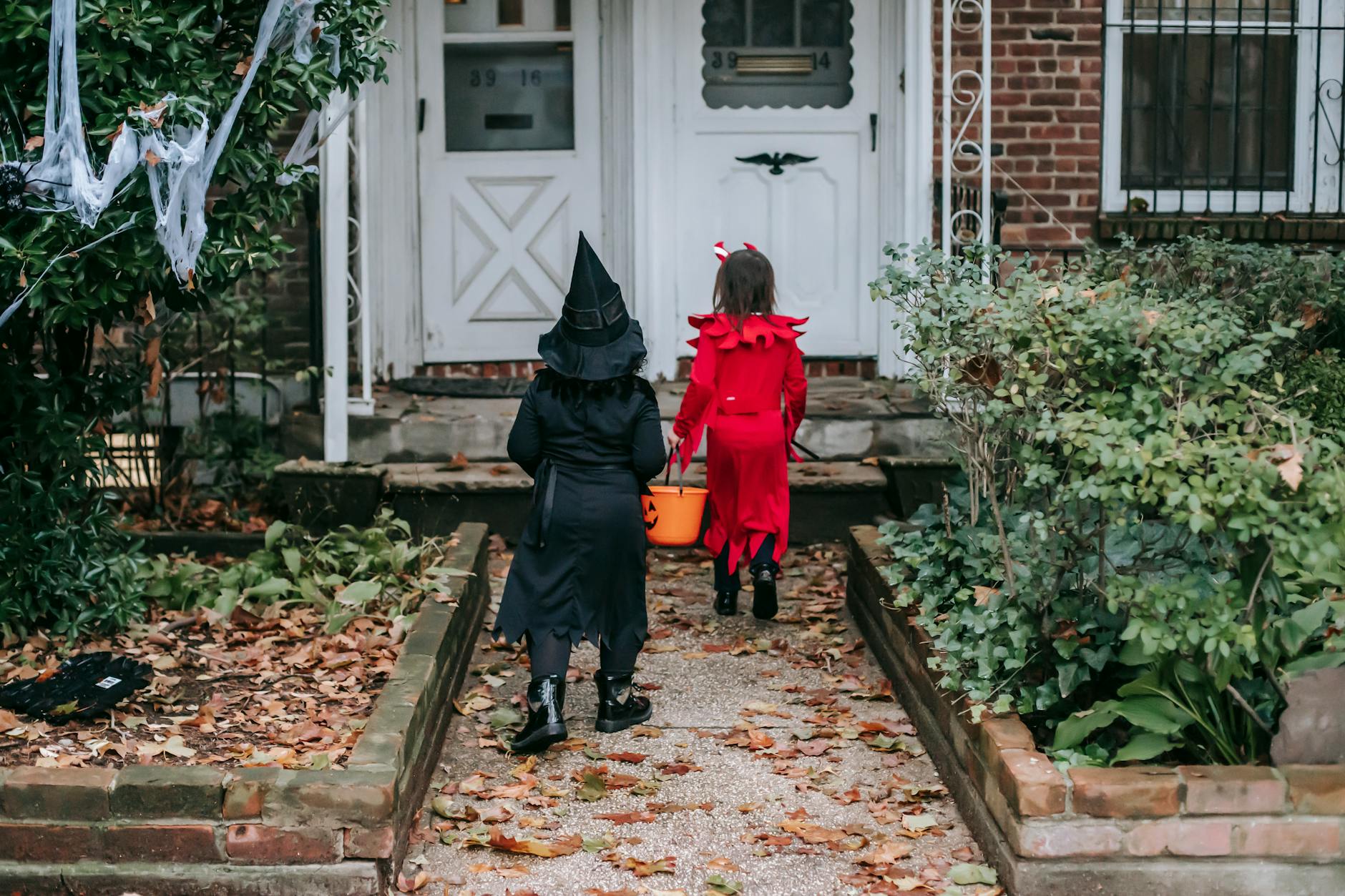
The response to this wasn't to stay inside and hope for the best. Communities lit enormous bonfires, made offerings of food and animals, and — here's the key part — wore costumes. Not fun costumes. Disguises. The idea was practical, in its own terrifying way: if you looked like a spirit yourself, the actual spirits would leave you alone. You'd blend in with the supernatural crowd rather than standing out as a vulnerable human target.
This is where the costume tradition begins. Not as entertainment, but as camouflage.
The Church Rewrites the Calendar
When Christianity spread through Celtic territories in the early medieval period, the Church made a strategic decision that would shape Halloween forever. Rather than trying to eliminate Samhain outright — which hadn't worked particularly well — they overlaid it with their own observances. In 1000 AD, the Church designated November 2nd as All Souls' Day, a day to honor the Christian dead. November 1st became All Saints' Day, or "All Hallows." The night before — October 31st — became All Hallows' Eve, which eventually contracted into Halloween.
The blending of traditions created something new. The Christian concept of honoring the dead merged with older folk practices around spirits and disguise. In medieval Europe, a custom called "souling" developed: poor people would go door to door on All Hallows' Eve, offering prayers for the dead in exchange for small cakes. This is, unmistakably, an early form of trick-or-treating. The costume element persisted too, partly through folk tradition and partly through the theatrical practices of the Church itself, which used dramatic costuming in religious pageants.
Crossing the Atlantic
Halloween as a distinct holiday was relatively muted in early America. The Puritan settlers of New England had little patience for what they considered pagan holdovers, and the holiday didn't gain much traction in the colonies. That changed dramatically in the mid-19th century, when waves of Irish and Scottish immigrants arrived — many of them fleeing the devastation of the Great Famine — and brought their Halloween traditions with them.
By the late 1800s, the holiday had taken root across the country, though it still looked quite different from what we know today. It was community-focused and often rowdy — more about pranks and mischief than costumes and candy. Young people would tip outhouses, soap windows, and generally cause low-grade chaos under the cover of the holiday's anything-goes atmosphere.
The shift toward the family-friendly, costume-centered version we recognize now happened gradually through the early 20th century. Community leaders and civic organizations actively pushed to move Halloween away from vandalism and toward organized parties and neighborhood activities. Costumes became central to that effort — a structured, fun outlet for the night's energy. By the 1920s and '30s, the holiday was being celebrated in ways that would look familiar to anyone alive today.
How It Became the Spectacle It Is Now
The postwar suburban boom of the 1950s supercharged Halloween into a full-blown American institution. Trick-or-treating became the standard format in neighborhoods across the country, and the costume industry grew up around it. By the time the baby boomers were kids, Halloween was deeply embedded in American childhood — a night that belonged entirely to children in a way that few other occasions did.
Commercial costumes, which had existed in limited form since the early 1900s, exploded in variety and availability. Pop culture characters entered the mix. Horror films gave the holiday a darker, more theatrical edge in the 1970s and '80s. And gradually, adults reclaimed it too — Halloween parties, bar crawls, and elaborate home decorations became as much a part of the holiday as trick-or-treating.
The ancient logic of the disguise — protect yourself from what you can't see — has long since been replaced by pure fun. But the impulse to put on a mask on October 31st is older than Christianity, older than America, older than almost anything else in the modern holiday calendar. That person handing out candy in a witch hat is participating in a tradition that stretches back to Iron Age bonfires in Ireland.
Something worth thinking about while you're sorting through your candy haul.