Before the Candy Corn: The Ancient Fear That Gave Us Halloween Costumes
Before the Candy Corn: The Ancient Fear That Gave Us Halloween Costumes
Every October, Americans spend somewhere north of $4 billion on Halloween costumes. That's billions of dollars on fake blood, foam muscles, witch hats, and licensed superhero suits — all for a single night of wandering around the neighborhood or standing in line at a party. It's one of the most enthusiastically celebrated traditions in the country.
But here's the thing nobody mentions while they're hot-gluing sequins to a last-minute costume: the reason we dress up at all has almost nothing to do with fun. It started with genuine, bone-deep fear of the dead.
The Night the Boundary Broke Down
To understand Halloween costumes, you have to go back about 2,000 years to the Celtic festival of Samhain (pronounced sah-win). The Celts — who lived across what is now Ireland, Scotland, and northern France — divided their year into two halves: the light half and the dark half. Samhain, celebrated on the night of October 31st, marked the transition between them.
To the Celts, this wasn't just a change of season. It was the one night of the year when the boundary between the living world and the realm of the dead became dangerously thin. The spirits of those who had died in the past year were believed to walk the earth on Samhain night, searching for a living body to possess so they could move on to the afterlife.
That's a terrifying premise, and the Celts took it seriously. Bonfires were lit on hilltops to guide good spirits and ward off evil ones. Offerings of food were left outside homes. And people wore disguises.
The logic was simple and, in its own way, pretty clever: if the spirits couldn't tell you apart from one of their own, they'd leave you alone. Costumes weren't about self-expression. They were camouflage. You dressed like a ghost or a demon so that actual ghosts and demons would pass you by.
The Church Gets Involved
When the Roman Empire spread Christianity through Celtic territories, the church didn't erase Samhain so much as absorb it. In 835 AD, Pope Gregory IV moved the Christian feast of All Saints' Day — a day honoring the dead — to November 1st, placing it directly on top of Samhain.
The night before became known as All Hallows' Eve. The name eventually contracted into Halloween. But the old customs didn't disappear. They just got a new coat of paint.
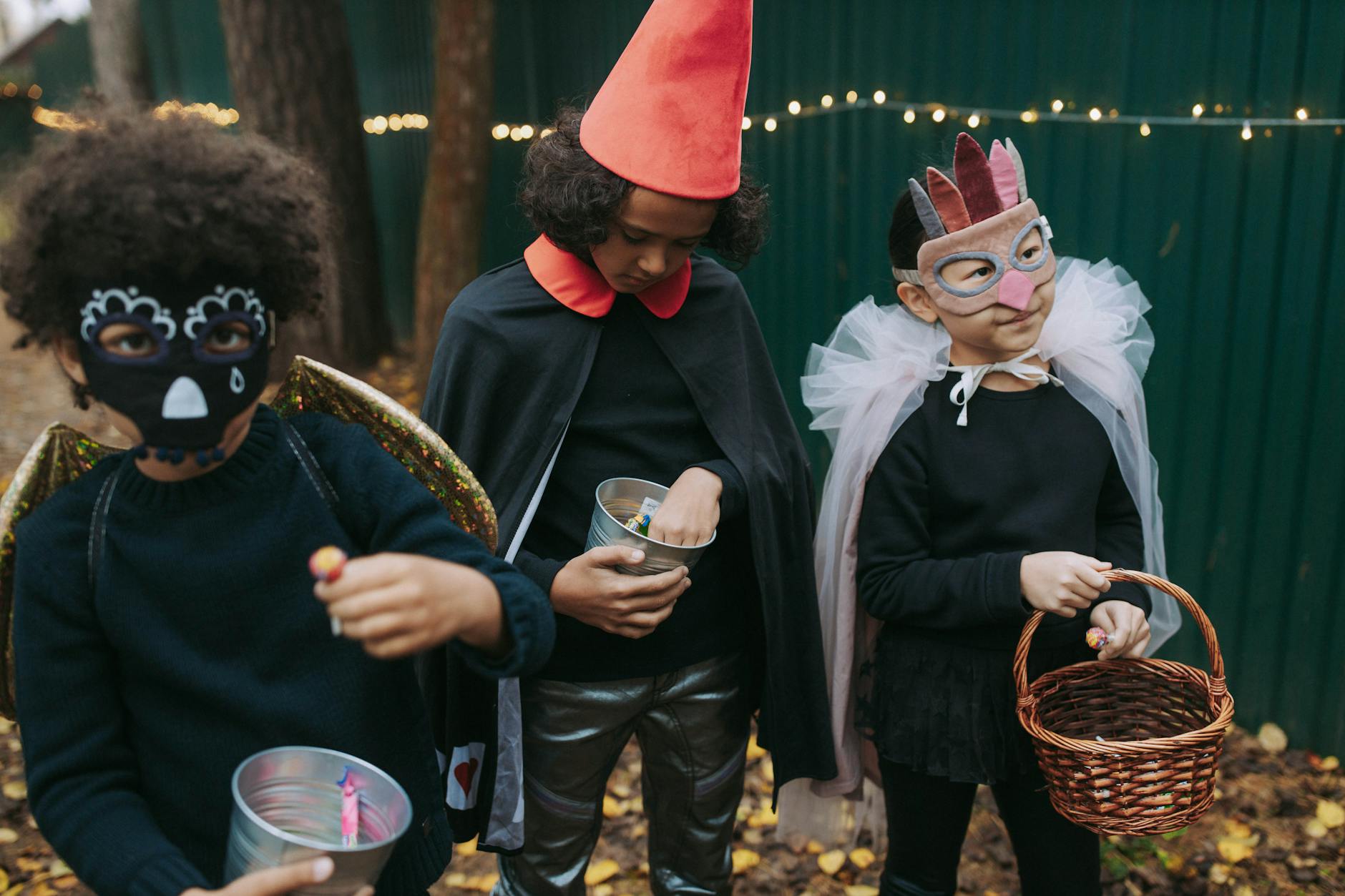
Throughout the Middle Ages in Britain and Ireland, the tradition of "souling" emerged — poor people would go door to door offering prayers for the dead in exchange for small cakes or food. Children and young adults would dress in costume, performing songs or tricks in exchange for treats. Sound familiar? The bones of trick-or-treating were already forming, centuries before anyone in America had heard of it.
The Irish Connection
Halloween as Americans know it is, in large part, an Irish import. The potato famine of the 1840s drove over a million Irish immigrants to the United States, and they brought their October traditions with them. In Ireland, Samhain customs had survived in folk form for centuries — carved turnips as lanterns, costumed figures going door to door, communal bonfires. The immigrants carried all of it across the Atlantic.
In America, the traditions found fertile ground. By the late 1800s, Halloween was being celebrated across the country, though it was still largely a community and harvest festival. The costuming element was there, but it was informal — homemade disguises, simple masks, whatever you could throw together.
The commercial machine kicked in during the early 20th century. By the 1920s and 30s, Halloween had become a recognized social event, and where there's demand, there's eventually a product. Costume manufacturing companies began appearing, offering ready-made disguises that went well beyond a bedsheet ghost.
How Fear Became a $4 Billion Industry
The real explosion came in the postwar decades. As American suburban culture took shape in the 1950s, trick-or-treating became a neighborhood institution. Parents bought costumes. Kids compared them on the street. The holiday locked into the cultural calendar in a way it had never quite managed before.
By the 1980s and 90s, Halloween was a full commercial phenomenon. Seasonal pop-up costume stores appeared and disappeared every October. Movie studios licensed characters for costumes. The holiday expanded beyond children, with adults throwing elaborate costume parties and going all-in on their own disguises.
Today, according to the National Retail Federation, roughly 70% of Americans plan to celebrate Halloween in some form, and costume spending alone tops $4 billion annually. Adults now spend more on their own costumes than they do on their kids'.
Same Instinct, Different Stakes
The distance between a Celtic farmer smearing ash on his face to fool the spirits of the dead and an adult spending $80 on a pop culture costume for a Saturday night party is enormous in terms of context. But the impulse — to put on a disguise, to become something else for a single night, to step outside your ordinary self — is exactly the same.
The fear that originally drove it is long gone. But the ritual survived. That's usually how the oldest traditions work: the meaning shifts, the practice stays.
So this October, when you're deciding between the skeleton jumpsuit and the inflatable T-Rex, just know that you're participating in a 2,000-year-old act of disguise. The stakes are considerably lower now. But the costume? That part hasn't changed at all.